


INTERNATIONAL
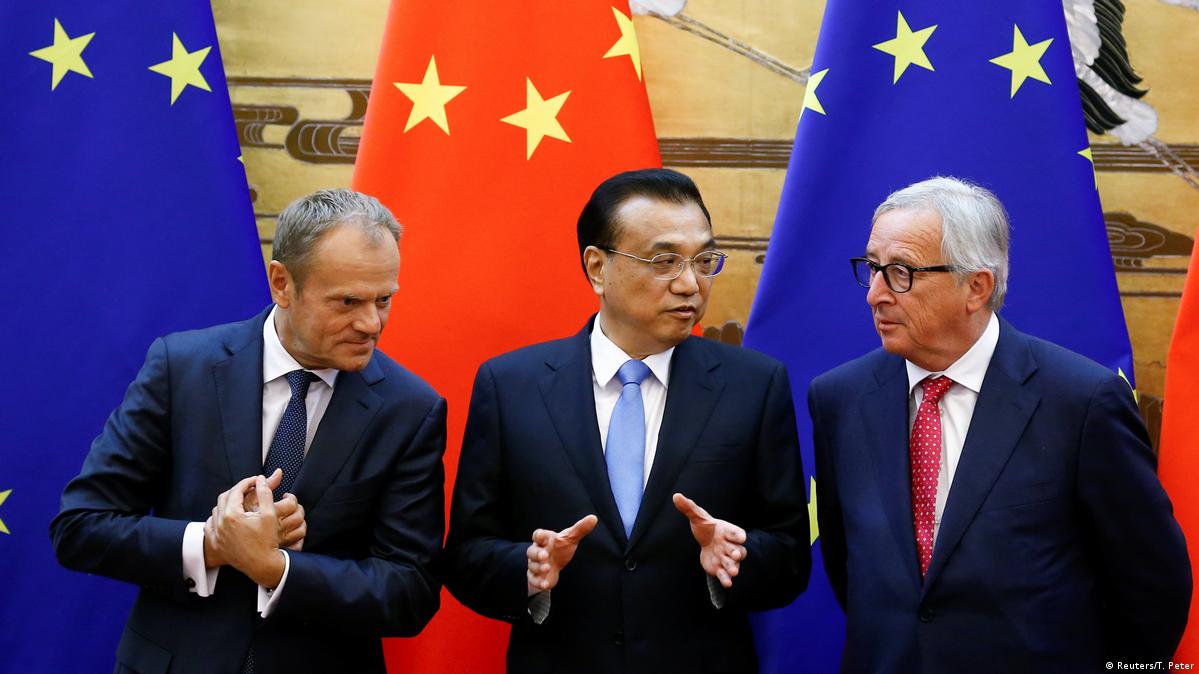
WESTERN LEADERS SEEK CLOSER CHINA TIES AMID US TARIFF UNCERTAINTY
Western leaders are increasingly seeking closer economic ties with China as uncertainty grows over the United States trade policy, analysts say, pointing to renewed tariff threats and the unpredictable approach of former President Donald Trump.
British Prime Minister Keir Starmer is the latest to move in that direction, visiting Beijing this week to promote what he described as “pragmatic” cooperation. His trip follows similar engagements by leaders of Canada, Ireland, France, and Finland, many of whom are visiting China for the first time in years in an effort to reset relations with the world’s second-largest economy.
“There is a veritable race among European heads of government to meet with President Xi Jinping,” said Hosuk Lee-Makiyama, director of the European Centre for International Political Economy.
According to him, the renewed interest is driven by competition among European countries to secure Chinese investment and market access ahead of upcoming China–US summits expected in February and April.
Beyond China, Western economies are also diversifying trade relationships. On Tuesday, India and the European Union announced a long-awaited trade agreement nearly two decades in the making, while Vietnam and the EU on Thursday pledged deeper cooperation in trade, technology, and security.
However, analysts say emerging markets such as India and parts of South America alone cannot sustain Europe’s export-driven economies.
“Half of global economic growth is generated by either the United States or China,” Lee-Makiyama said, adding that the US is “hardly opening up” its markets.
Trump’s renewed tariff threats have heightened concerns that the United States is becoming an unreliable trade partner, said William Alan Reinsch of the Washington-based Centre for Strategic and International Studies (CSIS).
“You can argue that, ironically, Trump’s policies pushed the EU–India agreement across the finish line,” Reinsch said, noting that negotiations had stalled for nearly 20 years.
During Starmer’s meeting with Xi on Thursday, the British leader said it was “vital” to strengthen bilateral ties, while the Chinese president emphasised the need for cooperation amid global geopolitical challenges.
Britain and China once described their relationship as a “Golden Era” a decade ago, but ties cooled after Beijing imposed a national security law on Hong Kong in 2020.
Canada has also moved to rebuild trade relations with China. Under a recent agreement, Beijing is expected to cut tariffs on Canadian canola seed to about 15 per cent from 84 per cent, while Canada will import 49,000 Chinese electric vehicles at preferential tariff rates.
Canadian Prime Minister Mark Carney’s visit to China marked what analysts describe as a shift in Ottawa’s global trade strategy.
“It signalled a fundamentally new approach to how Canada intends to navigate a more fragmented and uncertain world,” said Vina Nadjibulla of APF Canada, while cautioning that the move could be misinterpreted as downplaying China’s national and economic security risks.
Reinsch said the emerging trade deals could leave the United States at a disadvantage over time, noting that the agreements focus on traditional trade principles such as tariff reduction and removal of non-tariff barriers.
“The outlier,” he said, “is the United States.”