


METRO
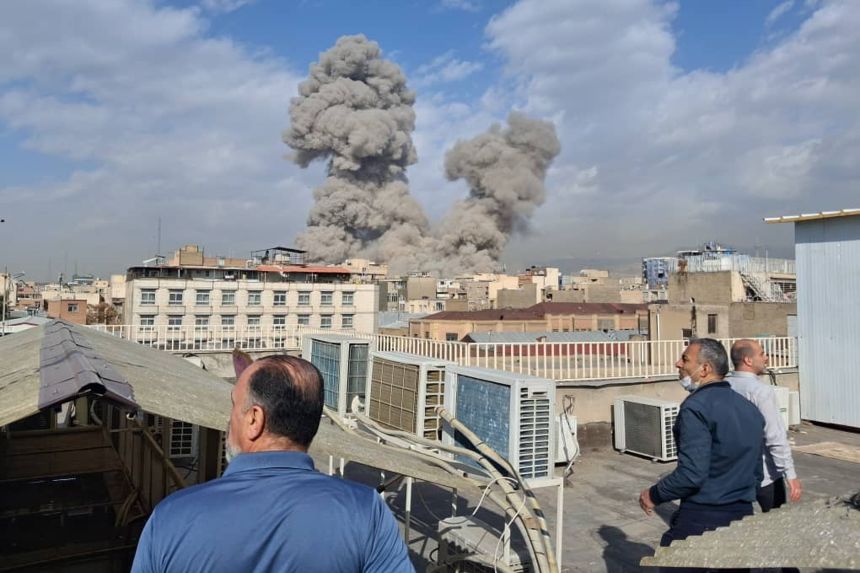
US, ISRAEL CARRY OUT COORDINATED STRIKES ON IRANIAN TARGETS
The United States and Israel launched coordinated strikes on Iranian targets on Saturday, triggering explosions and plumes of smoke across parts of Tehran.
US President Donald Trump said in a video message that American forces had begun “major combat operations in Iran,” describing the objective as eliminating imminent threats and dismantling Iran’s missile capabilities. He also warned Tehran of further military action if it did not comply with US demands.
Israeli Defence Minister Israel Katz called the operation a “preventive strike,” as sirens sounded in Jerusalem and emergency alerts were issued nationwide.
Iranian state television reported that President Masoud Pezeshkian was “safe and sound,” while the Fars news agency said multiple missile impacts were recorded in districts of Tehran. AFP journalists in the capital reported hearing loud explosions and seeing smoke rising over the city's central and eastern parts. Ambulances were deployed, though casualties were not immediately confirmed.
Airspace over Iran, Iraq, and Israel was temporarily closed following the strikes, and US embassies in Qatar and Bahrain advised American citizens to seek shelter.
The escalation follows recent nuclear negotiations between Washington and Tehran in Geneva, reportedly mediated by Oman. While Trump criticised Iran’s negotiating stance, Omani Foreign Minister Badr Albusaidi suggested progress had been made, including discussions on uranium stockpiling and enrichment limits.
The strikes also come amid heightened regional tensions and a significant US military buildup in the Middle East, including the deployment of the aircraft carrier USS Gerald R. Ford near Israeli waters.
US Secretary of State Marco Rubio is expected to travel to Israel for further talks on Iran. Meanwhile, Iran’s Foreign Minister Abbas Araghchi called for seriousness and realism in ongoing diplomatic efforts.
The situation marks a sharp escalation in hostilities, raising fears of a broader regional conflict as diplomatic channels remain fragile.