


POLITICS
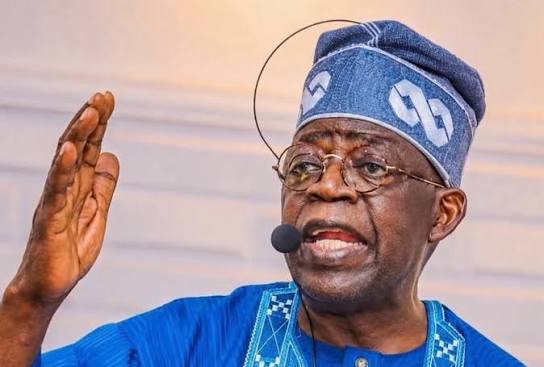
TINUBU CHALLENGES US BID TO RELEASE FBI FILES, CITES PRIVACY AND POLITICAL MOTIVES
President Bola Tinubu has asked a United States federal court to reject a request seeking the public release of his unredacted records held by the Federal Bureau of Investigation and the Drug Enforcement Administration.
In legal filings submitted by his lawyers, Tinubu argued that the records should remain protected under the US Freedom of Information Act and Privacy Act, insisting that the request does not meet the legal threshold for disclosure.
The President's legal team also maintained that there was no legitimate public interest under US law that would justify releasing the information, despite the fact that Tinubu is Nigeria's sitting President.
The application was brought by American transparency activist Aaron Greenspan, who has been seeking access to records concerning Tinubu through the US Freedom of Information Act.
Greenspan argued that the request was in the public interest because it concerns the sitting President of Nigeria and a country whose population is directly affected by his decisions.
Tinubu's lawyers rejected that argument, saying the public-interest provisions of US freedom-of-information laws are primarily concerned with revealing information about government activities rather than exposing private information about individuals.
The legal team cited a 1989 US Supreme Court decision, Department of Justice v. Reporters Committee for Freedom of the Press, to support its position that FOIA is intended to provide insight into what the government is doing rather than give the public access to private information contained in government files.
The President's lawyers further argued that the records fall under privacy protections contained in FOIA Exemption 7(C), which restricts the disclosure of personal information contained in law-enforcement records.
They maintained that releasing the documents could expose private information about Tinubu without providing meaningful evidence of misconduct by the US government.
Another major argument presented by the legal team was that Greenspan's request appeared to have a political dimension.
They argued that the activist's filings showed a particular interest in obtaining documents containing Tinubu's name and suggested that the FOIA process should not be used as a means of gathering information about an individual for political purposes in Nigeria.
Tinubu's lawyers also challenged suggestions that the records might reveal a previously undisclosed criminal prosecution or an agreement by US authorities not to prosecute him.
They described such claims as speculative and argued that Greenspan had not provided sufficient evidence of government wrongdoing to justify access to protected law-enforcement records.
The legal dispute is linked to investigations and proceedings involving Tinubu in the United States during the early 1990s.
The controversy resurfaced prominently during Nigeria's 2023 presidential election after US court documents relating to a 1993 civil forfeiture proceeding involving $460,000 connected to Tinubu became a major political issue.
The All Progressives Congress maintained during the election litigation that the matter was a civil forfeiture case rather than a criminal conviction. The Presidential Election Petition Court later ruled in September 2023 that the petitioners had not established that Tinubu was arrested, arraigned, convicted or sentenced in a criminal case in the United States.
The latest FOIA case, however, concerns access to records held by US government agencies and does not itself amount to a criminal prosecution or a finding that Tinubu committed a drug-trafficking offence.
The documents being sought include the FBI's file relating to Tinubu and interview records, including FBI Form 302 reports, covering investigations from 1992 and 1993.
The FBI has separately argued that some of the records should remain withheld because disclosure could expose law-enforcement methods, protected information and potentially endanger individuals. A US judge has permitted the agency to present some of its arguments privately for judicial review.
Tinubu's legal team is therefore asking the court to reject Greenspan's request and allow the FBI and DEA to continue withholding or redacting portions of the records.
The case has continued to attract political attention in Nigeria, with opposition figures and other interested parties arguing that greater transparency about the President's past is in the public interest.
For now, the disputed records remain subject to the US court process, and the latest filing represents Tinubu's formal legal opposition to their public disclosure rather than a final ruling on whether the documents will eventually be released.