


POLITICS
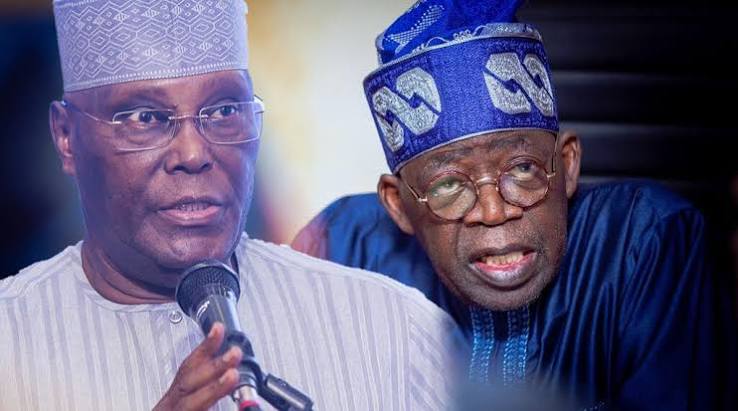
TINUBU, ATIKU CLASH OVER ECONOMIC REFORMS AS 2027 RACE DRAWS CLOSER
President Bola Tinubu and former Vice President Atiku Abubakar have exchanged contrasting views over the Federal Government’s economic policies, with the President defending his reforms as necessary for long-term growth while the opposition leader questioned their impact on ordinary Nigerians.
Tinubu, represented by the National Chairman of the All Progressives Congress, Prof. Nentawe Yilwatda, spoke on Tuesday at the second edition of the Asiwaju Scorecard Series and Policy Roundtable in Abuja. He argued that the reforms introduced since his administration came into office had begun laying the foundation for a stronger economy capable of reaching a $1tn valuation by 2030.
The President maintained that measures such as the removal of fuel subsidy, changes to the foreign exchange market, improved revenue mobilisation and increased investment in infrastructure were difficult but necessary decisions. According to him, Nigeria had inherited an economy characterised by multiple exchange-rate windows, foreign exchange shortages, weak revenue collection and significant debt-service pressures.
Tinubu’s representatives pointed to several economic indicators as evidence that the country was moving in a positive direction. They said Nigeria’s external reserves had risen to about $52.7bn by August 2026, while consolidated non-oil revenue increased from approximately N13.63tn in 2023 to N16.4tn during the first two quarters of 2026.
The administration also highlighted improvements in trade and economic growth. According to the figures presented at the event, Nigeria recorded real Gross Domestic Product growth of 4.43 per cent in the second quarter of 2026, while inflation had declined from its previous peak to about 15.4 per cent.
Tinubu, however, acknowledged that stronger macroeconomic indicators alone would not be enough to declare the reforms successful. He said the ultimate objective was for economic stability to translate into lower food prices, more employment opportunities, affordable credit, dependable electricity and improved purchasing power for Nigerians.
The President also outlined infrastructure development as a major component of his administration’s plan to achieve the $1tn economy target. He proposed an integrated network linking major deep-sea ports with roads and railways, while also promoting industrial parks, export-processing zones, logistics centres, agro-processing clusters and manufacturing hubs along major transportation corridors.
He argued that connecting agricultural and mineral-producing areas to rail and road infrastructure would encourage processing and manufacturing activities, create employment and strengthen Nigeria’s position as a major commercial and logistics hub in West and Central Africa.
The administration also highlighted programmes targeting young Nigerians, including the Nigeria Education Loan Fund, technical and vocational skills initiatives, digital training programmes and access to credit through CREDICORP. Tinubu described these programmes as investments in the productive capacity of the country's young population.
Atiku, however, strongly disagreed with the administration’s assessment of the economy. Through his Senior Special Assistant on Public Communication, Phrank Shaibu, the African Democratic Congress presidential candidate argued that Nigerians had endured years of hardship while the government was only now promising measures aimed at reducing the cost of living.
Atiku’s camp questioned why the government was announcing plans for cheaper transportation, increased food production and additional assistance for vulnerable citizens after what it described as more than three years of economic hardship.
The former Vice President argued that the central issue should not be a political contest between him and Tinubu but the difficulties faced by Nigerians struggling to afford basic necessities. His camp pointed to households dealing with high food costs, workers spending large portions of their salaries on transportation, farmers facing expensive logistics and students struggling with the rising cost of education.
Atiku also defended his proposal for reducing energy costs, arguing that cheaper fuel would have wider effects on the economy. His camp said lower transportation expenses would reduce the cost of moving agricultural produce and manufactured goods, potentially easing pressure on food prices and other essential commodities.
The former Vice President's proposed economic recovery plan, according to his team, would support domestic refining through a controlled and transparently budgeted crude supply framework. The proposal would also involve monitoring crude supplies, refined products and the eventual benefit passed on to consumers.
Atiku further criticised the student loan programme, arguing that loans should not be presented as evidence that education had become affordable. He said his administration, if elected, would seek to reduce the underlying cost of education and consider debt relief for qualifying student borrowers.
The opposition leader also demanded greater transparency over the financial gains attributed to the removal of petrol subsidy. His camp cited the Federal Government’s statement that the policy had mobilised about N15.8tn between June 2023 and December 2025 and questioned what measurable benefits had reached ordinary Nigerians in return for the sacrifices made.
The political disagreement comes as preparations intensify for the 2027 general elections, with economic management expected to remain a major issue in the contest. Fuel prices, food inflation, wages, employment, education costs and social protection are increasingly becoming central themes in the emerging debate between the Tinubu administration and opposition figures.
While the President maintains that his reforms are creating the foundation for sustainable economic expansion, Atiku and his supporters insist that the success of any policy should ultimately be measured by whether ordinary Nigerians can afford food, transportation, housing, education and other basic necessities.
The contrasting positions are likely to remain a major part of the political debate ahead of 2027, as Nigerians assess whether the government’s improving macroeconomic indicators are translating into tangible improvements in household living standards.