


POLITICS
SERAP, EDITORS’ GUILD REJECT FOREIGN AID BILL, THREATEN COURT ACTION
The Socio-Economic Rights and Accountability Project and the Nigerian Guild of Editors have threatened to challenge the proposed Foreign Aids (Regulation, Transparency and Disclosure) Bill, 2026, if the National Assembly passes it into law.
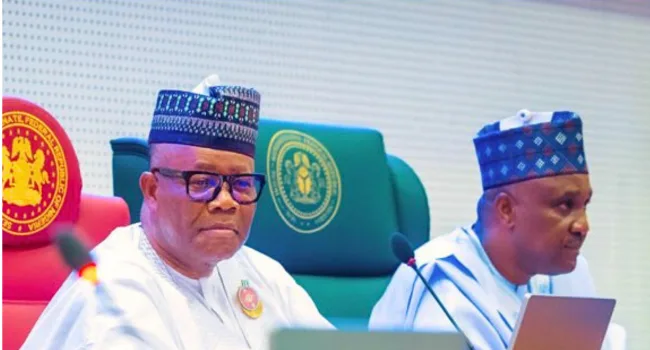
The two organisations described the proposed legislation as a threat to civic space, media freedom and democratic participation in Nigeria. They urged Senate President Godswill Akpabio and House of Representatives Speaker Tajudeen Abbas to immediately withdraw and reject the bill.
Their position was contained in a joint open letter dated August 29 and signed by SERAP Deputy Director Kolawole Oluwadare and NGE General Secretary Onuoha Ukeh.
The bill, sponsored by Senator Ibrahim Dankwambo of the Peoples Democratic Party, Gombe North, seeks to introduce mandatory registration and disclosure requirements for organisations and entities receiving foreign assistance.
SERAP and NGE argued that the proposed framework could give the government extensive powers over civil society organisations, independent media, religious bodies and other private entities that receive foreign grants or assistance.
They particularly criticised provisions that would establish a proposed Foreign Aid Regulatory Commission with powers to register organisations, demand disclosures, inspect records, investigate activities, monitor the use of foreign assistance and impose sanctions.
Under the proposed legislation, organisations could face a minimum fine of ₦20 million, while operating licences could also be suspended or revoked for non-compliance.
SERAP and NGE warned that such penalties could place significant pressure on organisations that depend on foreign funding to carry out public-interest activities.
They said independent media organisations could be particularly affected because foreign grants are often used to support investigative journalism, fact-checking, journalist safety and media development.
The groups also questioned the need for another regulatory body, arguing that Nigeria already has institutions responsible for corporate registration, financial reporting, taxation, anti-money laundering and anti-corruption enforcement.
They cited bodies including the Corporate Affairs Commission, Economic and Financial Crimes Commission, Special Control Unit Against Money Laundering, Nigerian Financial Intelligence Unit and Federal Inland Revenue Service as examples of institutions already exercising relevant regulatory responsibilities.
According to the organisations, the proposed law also contains terms such as “foreign aid,” “national priorities” and “public interest” without sufficiently clear definitions or objective standards for their application.
They warned that the proposed powers could expose civil society groups, journalists and other civic organisations to increased government supervision and interference.
SERAP and NGE further argued that additional executive-controlled regulation could undermine the independence of media organisations and create an environment that encourages self-censorship.
They also expressed concern over the possible effect of the bill on religious, humanitarian and charitable organisations that receive assistance from international donors.
The organisations linked their concerns to Nigeria's preparations for the 2027 general elections, arguing that the proposed legislation could further restrict civic participation and media freedom at a time when democratic space is already under pressure.
They maintained that the bill is inconsistent with constitutional protections for freedom of expression and association, particularly Sections 39 and 40 of the Nigerian Constitution.
SERAP and NGE therefore called on the National Assembly to abandon the proposed legislation and commit against introducing laws that could unjustifiably restrict civic space, media freedom or legitimate civil society activities.
They warned that if lawmakers proceed with the bill and it is eventually enacted, they would consider taking appropriate legal action in the public interest to challenge its constitutionality and protect freedom of association, media freedom and civic participation.
The organisations said they support transparency and accountability in the use of foreign funding but maintained that such objectives should not come at the expense of fundamental rights or the independence of legitimate civic organisations.