


POLITICS
RMAFC MOVES TO BOOST LOCAL COUNCILS’ FINANCES FOLLOWING AUTONOMY RULING
The Revenue Mobilisation Allocation and Fiscal Commission has pledged to support stronger financing for Nigeria’s 774 local government councils as part of efforts to translate the Supreme Court’s decision on local government financial autonomy into tangible development at the grassroots.
The commission said it would work toward ensuring that additional financial resources available to local councils are properly channelled into development programmes that directly benefit residents. The position was disclosed during an engagement between RMAFC officials and the Association of Local Governments of Nigeria in Abuja.
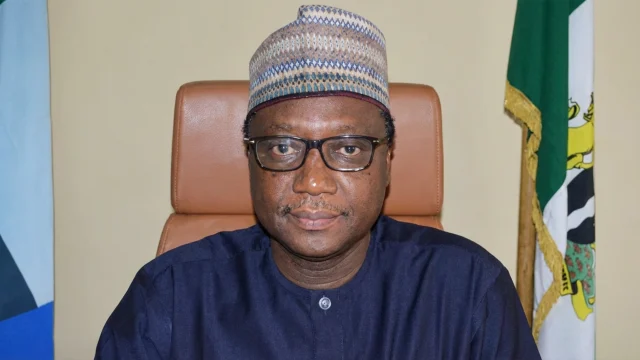
The RMAFC delegation was led by Aliyu Abdulkadir, who represents Nasarawa State on the commission and chairs its State and Local Government Monitoring Committee. The delegation visited ALGON National President Bello Lawal at the association’s national secretariat as part of efforts to deepen cooperation between the commission and the third tier of government.
Speaking on behalf of RMAFC Chairman Mohammed Shehu, Abdulkadir explained that the newly established committee was designed to strengthen engagement with local governments and identify practical measures that would improve their capacity to deliver services and development at the community level.
He noted that RMAFC has a constitutional responsibility to monitor revenues accruing to and disbursements from the Federation Account, including funds to which local governments are constitutionally entitled. He assured stakeholders that the commission would remain committed to implementing the Supreme Court's position on local government autonomy.
Abdulkadir, however, urged local councils not to rely solely on allocations from the Federation Account. He encouraged them to strengthen their internally generated revenue and develop additional sources of funding that could help them execute projects and provide essential services without excessive dependence on federal transfers.
The renewed attention to local government financing follows the Supreme Court judgment delivered in July 2024 affirming the financial autonomy of local councils. The ruling has continued to shape discussions about the relationship between federal, state and local governments and the most effective way to ensure that resources meant for grassroots development reach the appropriate level of government.
Meanwhile, African Democratic Congress presidential candidate Atiku Abubakar has also made local government autonomy a major part of his proposed agenda ahead of the 2027 presidential election.
Atiku pledged that, if elected president, his administration would ensure that funds meant for Nigeria’s 774 local government areas are paid directly to them. He argued that direct access to their statutory resources would strengthen the ability of councils to respond to local development challenges and provide services to their communities.
In a statement issued through his spokesperson, Kenneth Okonkwo, the former vice president said his proposed approach would respect existing court judgments and ensure that public funds are transferred to the level of government for which they are intended. He specifically referenced the 2024 Supreme Court judgment on local government financial autonomy.
Atiku maintained that stronger financial independence at the local level could improve grassroots development while also helping councils address poverty and security challenges. He argued that local governments, being closest to communities, should have sufficient resources to respond to problems confronting their residents.
The former vice president also criticised the Federal Government’s handling of education financing, particularly its use of the Nigerian Education Loan Fund as part of its argument for improved access to higher education. He promised to review the NELFUND policy and introduce debt forgiveness for qualifying students if elected.
Atiku’s position followed a statement by President Bola Tinubu on economic issues. Atiku’s Senior Special Assistant on Public Communication, Phrank Shaibu, criticised the President’s reference to NELFUND, arguing that government should address the underlying cost of education rather than rely primarily on loans to help students cope with rising expenses.
Shaibu contended that presenting student loans as evidence of affordable education was misleading if families were already struggling with increased education costs. His comments added another dimension to the growing political debate over economic policies ahead of the 2027 elections.
In a separate development, Imo State Governor Hope Uzodimma moved to dismiss reports that the Renewed Hope Ambassadors, a pro-Tinubu support organisation, had been dissolved.
Uzodimma, who serves as Director-General of the organisation, told members at a meeting in Abuja that the group remained intact and committed to mobilising support for President Tinubu’s re-election bid. He described reports of its dissolution as false and urged members not to be distracted by what he called attempts to create confusion within the organisation.
The governor explained that the formation of a Presidential Campaign Council ahead of an election should not be interpreted as the replacement or dissolution of existing support structures. He maintained that the Renewed Hope Ambassadors would continue its activities and remain focused on supporting the administration.
The developments have placed local government autonomy and grassroots financing among the issues likely to feature prominently in Nigeria’s political discourse ahead of the 2027 general elections. While RMAFC is focusing on strengthening the financial capacity and accountability of councils, political actors are also presenting different approaches to how local governments should receive and manage their resources.
For the autonomy framework to produce meaningful results, stakeholders will need to balance direct access to funds with transparency, accountability and improved revenue generation at the local level. The effectiveness of the policy will ultimately be measured by whether increased financial independence leads to better roads, healthcare, education, sanitation, security and other essential services for Nigerians at the grassroots.