


NEWS XTRA
REDEEMER’S HEALTH VILLAGE EXPANDS ROBOTIC SURGERY IN NIGERIA
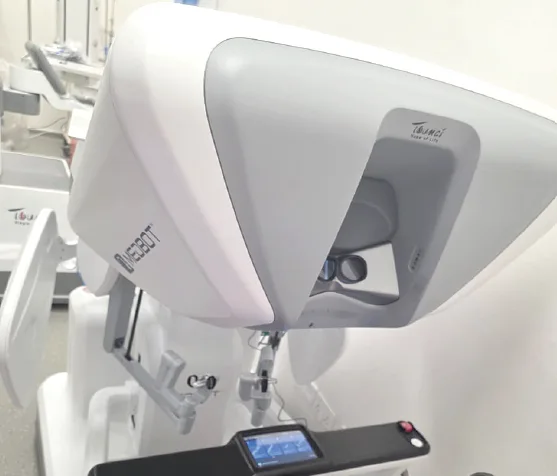
Redeemer’s Health Village in Redemption City, Mowe, Ogun State, is expanding the use of robotic surgery after successfully carrying out several robot-assisted procedures, including a remote operation on a kidney cancer patient in Abuja.
The remote procedure was controlled by a surgeon seated at a console in Mowe, hundreds of kilometres away from the patient. Through robotics and telecommunications technology, the surgeon guided robotic instruments inside the patient’s body and successfully removed the cancerous tumour.
The Chief Executive Officer of RHV and former Medical Director of the Federal Medical Centre, Ebute Metta, Dr Adedamola Dada, said the development could mark a new chapter for healthcare in Nigeria.
According to Dada, the goal is to make advanced medical procedures available locally at lower costs while allowing patients to remain close to their families instead of travelling abroad for treatment.
He said RHV was established to provide world-class healthcare that is affordable and accessible to Nigerians regardless of their religion, ethnicity, state of origin or background.
The hospital currently has five operating theatres and provides various specialised services, including joint replacement, neurosurgery, complex orthopaedic procedures and in-vitro fertilisation. It also has a 16-bed adult intensive care unit and a neonatal intensive care unit with almost 20 beds.
Dada said robotic surgery allows greater precision and enables surgeons to perform procedures through very small incisions. He added that the technology can reduce blood loss, postoperative pain and hospital stays while helping patients recover faster in appropriately selected cases.
He said five recent robotic procedures included prostate cancer surgery, treatment for an enlarged prostate and surgery for a complex urinary condition. According to him, the patients were discharged the following day, with none requiring a blood transfusion.
Dada also said robotic surgery could help reduce medical tourism. He claimed that procedures at RHV can cost about 10 per cent of what patients may pay abroad, depending on the procedure, country and hospital.
He gave the example of a colleague who paid about $70,000 for a similar robotic procedure in the United States, while the same surgery at RHV costs about N20m, including surgical fees and other costs.
The hospital also plans to repeat its telesurgery between Lagos and Abuja on October 18 and 19. Dada said RHV was discussing similar procedures with partners in Angola and hoped to demonstrate the technology with partners in the United States.
He, however, stressed that technology alone cannot transform healthcare without trained professionals. RHV is therefore preparing to establish a Robotic Academy in partnership with the National Postgraduate Medical College of Nigeria and Redeemer’s University.
The academy is expected to train about 150 specialists within two years, including surgeons, nurses and biomedical engineers who will support the growth of advanced robotic healthcare in Nigeria.
The surgeon who led the remote procedure, Prof Obi Davies-Ekwenna, said the successful operation showed how telesurgery could help overcome geographical barriers and give patients access to specialised medical expertise regardless of their location.
One of the hospital’s patients, Pastor Alexander Idachama, who underwent robotic-assisted surgery for prostate cancer, said the experience saved him the cost and inconvenience of travelling abroad.
He described the technology as highly precise and said his recovery involved significantly less pain.