


BUSINESS EXTRA
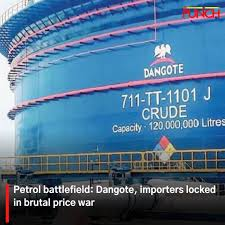
PETROL PRICE WAR DEEPENS AS DANGOTE, IMPORTERS BATTLE FOR MARKET CONTROL
Nigeria’s downstream petroleum sector is currently experiencing one of its fiercest battles in years, as the Dangote Petroleum Refinery and fuel importers clash over petrol pricing. This conflict has triggered widespread losses and uncertainty across the supply chain.
The crisis began when Dangote Refinery decided to reduce its petrol gantry price from ₦828 to ₦699 per litre. This move has sent shockwaves through the industry. While many Nigerians have welcomed the price reduction as much-needed relief, especially during the festive season, fuel importers, depot owners, and filling station operators claim that this price cut has plunged them into significant losses.
Industry data indicates that fuel importers could lose as much as ₦102.48 billion monthly because of the new pricing regime. Simultaneously, Dangote Refinery is projected to lose approximately ₦91 billion monthly, underscoring the intensity of the price war and the financial strain affecting all parties involved.
Despite these substantial losses, Aliko Dangote, President of the Dangote Group, has remained firm, insisting that petrol should not be sold above ₦739 per litre nationwide. During a press briefing, he stated that partner filling stations, starting with MRS outlets, would immediately enforce the new pump price, warning that any attempt to keep prices artificially high would be resisted.
The ripple effect of Dangote’s price slashing has been swift. Private depot owners and importers, struggling to stay competitive, have been compelled to significantly lower their prices. Market checks in Lagos revealed that many depots have cut petrol prices by about 14 percent within days. Several depots that used to sell petrol for around ₦828 per litre are now offering it for between ₦702 and ₦710 per litre, representing reductions of over ₦100 per litre.
Depots such as MENJ, Integrated, Bovas, and A.A. Rano have all recorded steep price cuts, while Dangote-linked depots have provided some of the lowest prices in the market. However, these adjustments have come at a cost, as marketers are now selling fuel purchased at higher prices below cost, eroding their profit margins and increasing financial pressure.
According to figures from the Nigerian Midstream and Downstream Petroleum Regulatory Authority, Nigeria consumes around 50 million litres of petrol daily, totaling roughly 1.5 billion litres monthly.
Dangote Refinery supplies about 23.52 million litres each day, while importers account for the remaining 26.48 million litres. With Dangote aggressively pricing its product, importers now face shrinking market shares and escalating losses.
While consumers benefit from lower prices at the pump, the ongoing battle has exposed serious flaws in Nigeria’s deregulated petroleum market. Analysts warn that prolonged losses could force some importers and marketers out of business, potentially reshaping the sector and increasing reliance on local refining.
For the moment, the petrol battlefield remains tense, with Dangote and importers locked in a high-stakes struggle that could redefine fuel pricing, competition, and sustainability in Nigeria’s downstream oil sector.