


POLITICS
OPPOSITION PARTIES BEGIN FRESH PUSH FOR COMMON 2027 PRESIDENTIAL CANDIDATE
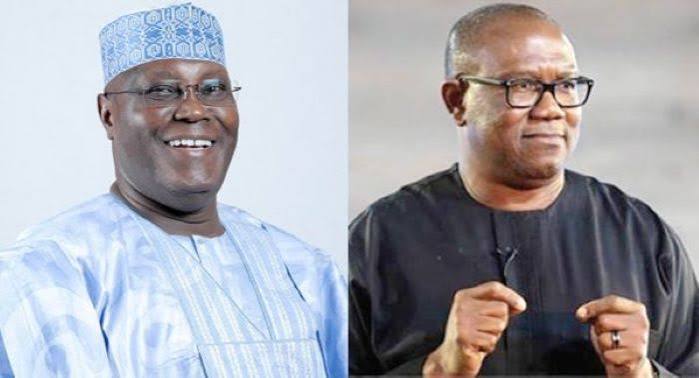
Opposition political parties have commenced a fresh effort to produce a single presidential candidate to challenge the ruling All Progressives Congress in the 2027 general election, although two of the biggest opposition figures, Atiku Abubakar and Peter Obi, were absent from the opening meeting.
The negotiations began on Monday at the Yar’Adua Centre in Abuja following an initiative by the G-100 political pressure group. Representatives of six opposition parties attended the meeting, including the African Democratic Congress, Allied Peoples Movement, Nigeria Democratic Congress, Peoples Democratic Party, Peoples Redemption Party and Social Democratic Party.
Among those who participated were PRP presidential candidate Donald Duke, SDP candidate Adewale Adebayo, Democratic Leadership Alliance candidate Moses Olusoji and APM vice-presidential candidate Lawan Daura, alongside other party leaders and political stakeholders.
Although Atiku and Obi were not present, their absence was not officially explained at the summit. A source familiar with the discussions suggested that both politicians were closely monitoring the process and could decide on their involvement after assessing the framework being developed by the organisers.
The source noted that the timing of the initiative could present a major challenge because several opposition parties have already selected their presidential candidates. According to the source, one of the key questions facing the negotiations is whether any of the candidates would be prepared to withdraw their ambitions in favour of another contender.
Obi's absence was also linked to the political calculations surrounding his reported alliance with former Kano State Governor Rabiu Kwankwaso. The source suggested that Obi and Kwankwaso would be unlikely to abandon their political plans unless other contenders were prepared to support their proposed arrangement.
However, Atiku's media aide, Phrank Shaibu, rejected any suggestion that the former vice president's absence amounted to a boycott of the initiative. He said Atiku remained committed to building a broad and united opposition capable of challenging the APC in 2027.
The summit also received support from Donald Duke, who said he would back whichever candidate eventually emerged from the negotiation process. The former Cross River State governor maintained that his support for the initiative was not dependent on whether he personally secured the opposition ticket.
The G-100 convener, Salihu Lukman, said the opposition needed to learn from the 2023 election, when votes were divided among several major opposition candidates. He argued that the combined opposition vote was significantly higher than the figure secured by President Bola Tinubu, but the division prevented the opposition from defeating the APC.
Lukman also referred to the 2015 election, when opposition parties eventually came together to form the APC and defeated the then-ruling PDP. He argued that the success of that alliance was based on an agreed process and rules rather than personal relationships among the political leaders.
At the conclusion of Monday's meeting, the participating parties agreed to establish three major coalition organs: a Central Leadership Committee, a Publicity and Communication Committee and a Legal Committee. Five additional working groups were also created to develop proposals covering democratic renewal, a single-term transition arrangement, national reforms, opposition unity and a roadmap towards selecting a common presidential candidate.
The working groups have four weeks to complete their assignments, after which the opposition parties are expected to reconvene to consider their recommendations.
Lukman stressed that the initiative was not immediately asking any presidential candidate to withdraw or any political party to dissolve. Instead, he said the objective was to establish a transparent mechanism through which the competing interests of the parties and candidates could be negotiated before a final decision is made.
The G-100 initiative also proposed a four-year transition arrangement as part of its broader reform agenda, although the summit's communiqué did not provide details on how such an arrangement would be implemented or whether constitutional changes would be required.
With the 2027 election approaching and major opposition figures already pursuing separate political ambitions, the success of the latest coalition effort will largely depend on whether the parties can agree on a transparent process capable of determining which candidate will ultimately represent the opposition against the APC.