


BREAKING NEWS
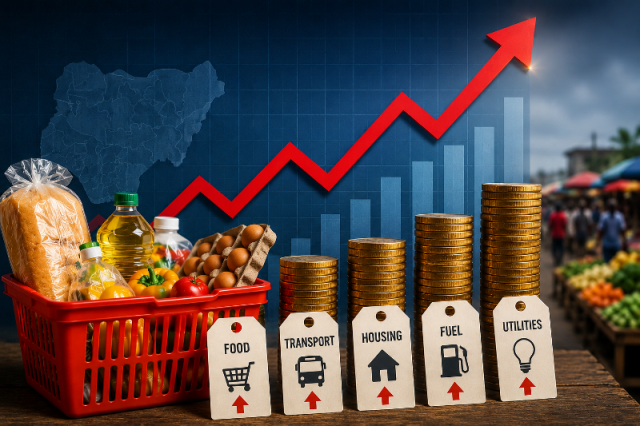
NIGERIA’S INFLATION RISES TO 15.69% IN APRIL
Nigeria’s inflation rate increased to 15.69% in April 2026, according to the latest figures released by the National Bureau of Statistics (NBS).
This represents a rise from the previous month’s rate. The increase in the Consumer Price Index (CPI) shows that the cost of goods and services continued to climb, putting more pressure on Nigerian households.
Food inflation remains a major concern, as prices of staple items such as yam, rice, beans, garri, and vegetables stayed high. Transportation costs, housing, and cooking gas also contributed significantly to the overall rise in the inflation figure.
Economists say the April increase may be linked to persistent challenges including high cost of fuel, naira volatility, and rising cost of imported goods. Many families have been struggling to cope as the prices of basic commodities continue to go up.
The Central Bank of Nigeria (CBN) has been using monetary policy tools to bring down inflation. While there have been periods of moderation in recent months, this latest uptick shows the battle against rising prices is still ongoing.
President Bola Tinubu’s administration has repeatedly said its economic reforms are aimed at long-term stability, even though they are causing short-term pain for many Nigerians.
Analysts will be watching closely to see if the inflation rate begins to trend downward in the coming months or if further measures will be needed to control it.
For now, the 15.69% inflation rate in April confirms that living costs remain high for millions of Nigerians as the country continues to navigate its economic challenges.