


HEALTHWISE
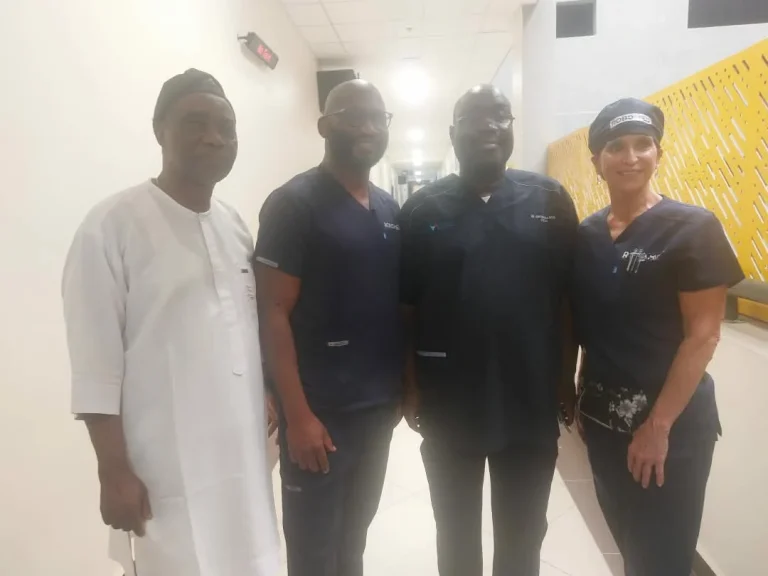
NIGERIA RECORDS W’AFRICA’S FIRST TELEROBOTIC SURGERY ACROSS 500KM
Nigeria has recorded what the Redeemer’s Health Village described as the first telerobotic surgery in West Africa, following a procedure carried out on a patient about 500 kilometres away from the surgeons.
The surgery was performed over the weekend at the Redeemer’s Health Village in Mowe, Ogun State, in collaboration with RoboMed Global and Nisa Premier Hospital, Abuja.
Telerobotic surgery, also known as remote surgery, allows surgeons to operate on patients from a different location using a robotic surgical system connected through telecommunications technology.
The procedure performed was a right radical nephrectomy, with surgeons at the Redeemer’s Health Village remotely operating on a patient at the Abuja-based hospital.
Speaking after the procedure, the Chief Executive Officer of RHV, Dr Adedamola Dada, described the achievement as a major development for Nigeria’s healthcare system.
Dada said the successful procedure marked the first time, according to the facility, that telesurgery had been performed in West Africa.
He explained that the surgical robot at the Abuja hospital was connected to the robotic control system at RHV through an internet connection.
According to him, the technology could make it possible for specialists outside Nigeria to remotely perform complex procedures on patients in the country, particularly in cases where specialised manpower is unavailable locally.
Before the telerobotic procedure, RHV also carried out a robot-assisted pyeloplasty on a 28-year-old patient on the same day.
Dada explained that the procedure involved reconstructing the renal pelvis, removing an obstruction and restoring the free flow of urine.
He said the successful outcome demonstrated the potential of robotic surgery to improve access to advanced medical procedures in Nigeria.
However, Dada called on the Federal Government to support the training of medical professionals in robotic surgery, stressing that developing local expertise would be important for sustaining the adoption of the technology.
He said government sponsorship and scholarships could help surgeons, nurses, biomedical engineers and other specialists acquire the skills required to operate and support robotic surgical systems.
According to him, while procuring robotic equipment remains important, a major challenge is developing enough trained personnel to use and maintain the technology effectively.
Dada said private organisations could help bridge the equipment gap, while government support would be particularly important in developing the required manpower.
The robotic surgeon who led the procedure, Prof. Obi Davies-Ekwenna, said the achievement demonstrated how technology could help overcome geographical barriers to specialised healthcare.
Davies-Ekwenna said the team successfully operated on a patient with a kidney tumour at the Abuja hospital from a distance of about 500 kilometres.
He said the technology could provide patients with access to specialists both within and outside Nigeria, regardless of their location.
The surgeon added that telesurgery could potentially allow complex procedures to be performed remotely from different parts of the world while maintaining precision.
The RHV Board Chairman, Dr Kunle Onokoya, also said robotic surgery was expanding the range of procedures that could be successfully performed on patients.
He noted that some surgeries previously considered too risky or difficult to perform could now be carried out with the assistance of robotic technology.