


RELIGION/BELIEF
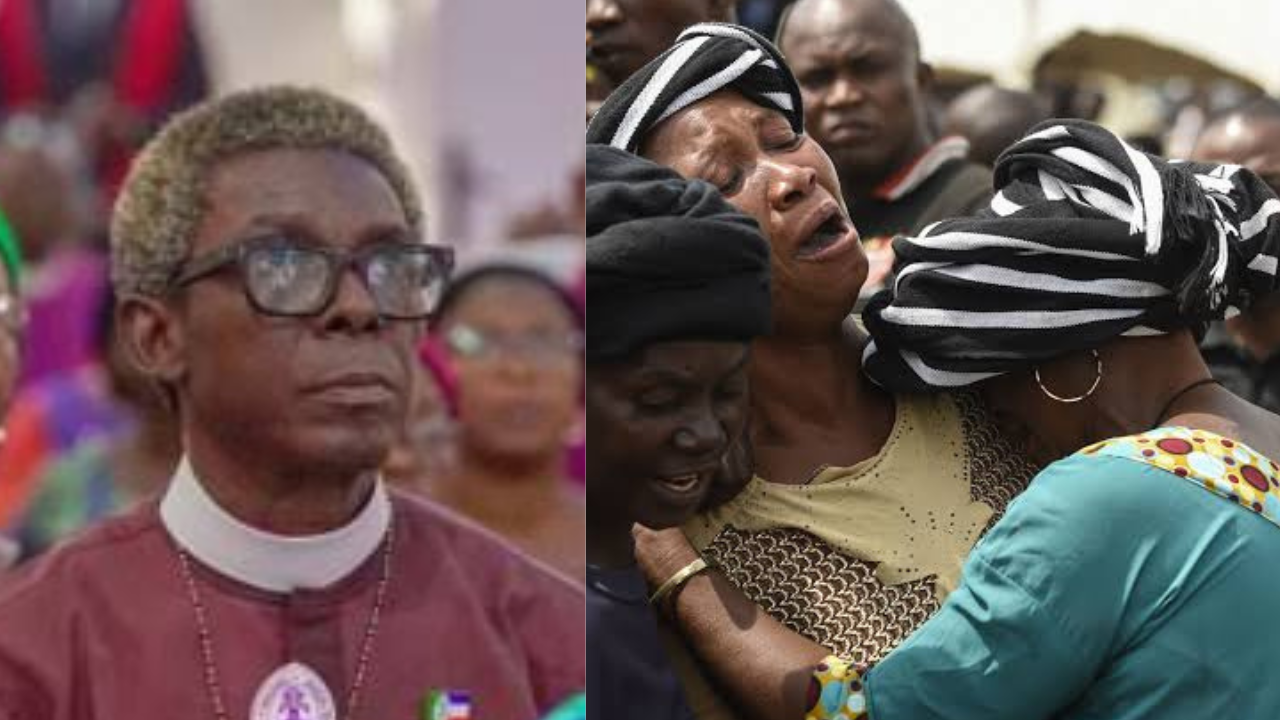
NIGERIA IS TURNING INTO A LAND OF TEARS AND BLOOD — ANGLICAN BISHOP OF WARRI
Delivering his address during the 15th Synod of the Diocese of Warri, Anglican Communion, themed “Overcoming the Birthright of Christians”, Rt. Rev. Christian Esezi Ide expressed grave concern over the deteriorating state of the nation. Speaking at the Cathedral of St. Andrew in Warri, the bishop lamented Nigeria’s alarming insecurity, citing reports that show 55,910 Christians were killed between 2019 and 2023, with Nigerians accounting for 90% of all Christians killed globally during that period.
He urged the Federal Government to take decisive and urgent action to address the worsening security crisis. Here are key excerpts from his charge:
---
Security Crisis
According to the Observatory for Religious Freedom in Africa, 90% of all Christians killed worldwide annually are Nigerians. Between October 2019 and September 2023 alone, 55,910 were killed, and 21,000 others abducted by terrorist groups.
Bishop Ide questioned the government’s inability to protect its citizens, particularly Christian communities. “Why does the government allow militant herdsmen to kill, destroy, and kidnap with impunity, while no one is held accountable?” he asked. He argued that the ongoing violence appears religiously motivated and akin to ethnic cleansing. “Not one perpetrator has been brought to justice,” he lamented.
Calling for accountability, he warned that Nigeria is rapidly becoming a land "flowing with tears and blood" due to relentless terror, destruction, and fear. He urged the government and security agencies to take stronger actions, collaborate with local vigilante groups, and secure the nation's porous borders.
---
Call for a New Constitution & National Reconciliation
The bishop reiterated the need for a completely new Constitution—not a patchwork revision of the 1999 military-imposed document. He proposed that a sovereign assembly representing all ethnic groups draft a truly democratic Constitution to address Nigeria's foundational issues.
Acknowledging the divisions along ethnic and religious lines, he praised President Tinubu’s creation of Regional Development Commissions but suggested that a National Reconciliation Commission (NRC) should also be established to address long-standing grievances and heal national wounds.
---
Economic Hardship
Bishop Ide highlighted Nigeria's fragile economy, marked by soaring inflation, rising foreign debt, and a plummeting Naira. He noted that the removal of fuel subsidies and the floating of the currency have further impoverished Nigerians.
He welcomed the launch of the Special Agro-Industrial Processing Zone (SAPZ) in Kaduna as a positive step toward revitalizing agriculture and improving infrastructure. However, he warned against policy reversals and urged the government to support SAPZ initiatives nationwide.
He also addressed the alarming unemployment rate, stressing that while joblessness should not justify criminal activity, the government must do more to create meaningful opportunities for youth.
---
Healthcare in Decline
According to the Federal Ministry of Health, life expectancy in Nigeria is just 54 years—far below the global average of 73.3. The bishop decried underfunded hospitals, poor doctor-patient ratios, and substandard healthcare facilities.
He criticized the federal government’s allocation of only 5.18% of the 2025 budget to health, far below the 15% pledged in the 2001 Abuja Declaration. USAID’s recent suspension of key health programme funding further deepens the crisis. Though the government has approved new healthcare funding, Bishop Ide urged long-term, self-sustaining solutions for the sector.
---
Judiciary Must Remain Independent
Describing the judiciary as a stabilizing force and “the last hope of the common man,” Bishop Ide emphasized the importance of judicial independence and integrity. He called on all arms of government and oversight bodies such as the NJC to safeguard the judiciary from political interference, ensure fair appointments, and uphold ethical standards among judges.
---
Education Reform Needs Clarity
Education, being central to development, must not suffer from confusion and inconsistency, the bishop said. He referenced the proposal by Education Minister Dr. Tunji Alausa to shift from the 9-3-4 system to a 12-4 model, warning that such drastic policy shifts require clear communication and thoughtful planning to avoid disrupting educational progress.
---
Combating Gender-Based Violence
Bishop Ide raised the alarm over the rising cases of gender-based violence, particularly against women, girls, widows, and orphans. Citing reports that nearly two dozen women have died in such incidents in 2025 alone, he called for stricter enforcement, stronger support systems, and a joint response by the government and religious institutions to end violence in homes, schools, and workplaces.
---
Delta State Progress
Reflecting on the performance of Delta State Governor Sheriff Oborevwori, Bishop Ide commended the progress under the M.O.R.E. agenda—which stands for Meaningful Development, Opportunities for All, Realistic Reforms, and Enhanced Peace and Security.
He praised the infrastructural developments in Warri and Effurun, including new flyovers, road expansions, and pedestrian bridges, and expressed hope that these projects would be completed on schedule to boost economic activity in the region.
---
INEC and Redelineation Tensions
The bishop also addressed recent tensions over the Independent National Electoral Commission’s (INEC) ward redelineation exercise in Warri Federal Constituency, which affects the Ijaw, Itsekiri, and Urhobo communities. The redrawing of political boundaries has stirred ethnic tensions, raising fears of renewed conflict reminiscent of the 1997–2003 Warri crisis.
Recalling the displacement of over 200,000 people during past clashes, Bishop Ide urged INEC, the Delta State Government, and all stakeholders to resolve disputes peacefully and remember the unity fostered through intermarriage among the groups. “War now would be like fighting your own brothers and sisters,” he warned.