


INTERNATIONAL
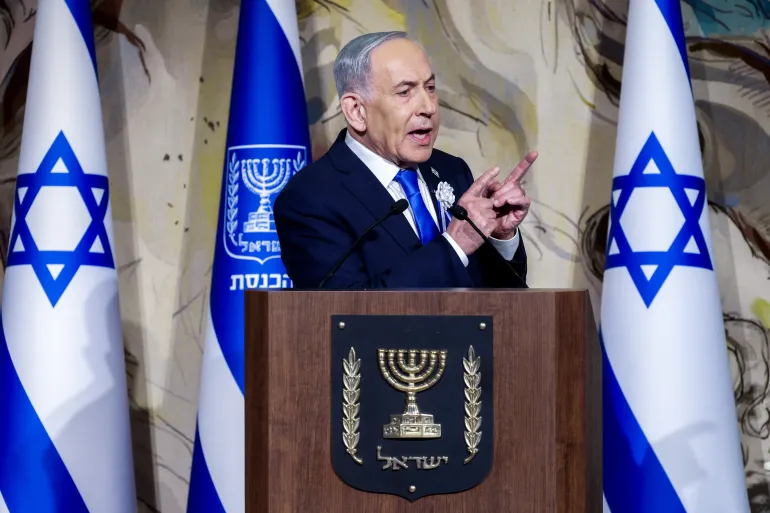
NETANYAHU’S UNITY APPEAL EXPOSES DEEP DIVISIONS IN ISRAELI POLITICS
Benjamin Netanyahu’s call for a national unity government drew heckling and walkouts at the opening of Israel’s new parliament on Tuesday, highlighting the divisions surrounding his efforts to remain in power.
The caretaker prime minister urged opposition parties to join him, arguing that threats from Iran and other security challenges required a broad coalition.
However, he also accused parties representing Palestinian citizens of Israel of supporting terrorism and seeking the country’s destruction, without providing evidence.
Several Palestinian lawmakers walked out, while former prime minister Naftali Bennett exchanged remarks with Netanyahu and his allies.
Opposition leader Gadi Eisenkot, who has been given the first opportunity to form a government, subsequently cancelled planned coalition talks with Netanyahu and described him as unfit for office.
The confrontation has renewed debate about the influence of personality over policy in Israeli politics.
University of Essex researcher Roi Zur said Netanyahu had helped reshape political loyalties around individual leaders rather than parties.
He noted that voters increasingly describe their choices as backing Netanyahu, Bennett or Eisenkot, instead of identifying primarily with a political organisation.
Pollster Dahlia Schneidlin said this personalisation exists despite Israel’s electoral system being based largely on party lists.
She stressed that forming a government still requires negotiation and compromise between parties—skills Eisenkot must demonstrate if he is to assemble a viable coalition.
Chatham House senior fellow Yossi Mekelberg argued that concentrating power around leaders had intensified hostility and weakened constraints within parties.
Netanyahu’s political future remains uncertain. If Eisenkot succeeds, Netanyahu could lose office while his corruption trial continues and face a possible inquiry into government failures preceding the October 7, 2023 attacks.
Analysts nevertheless suggest that the leader-centred political culture he helped strengthen could endure beyond his time in power.