


BREAKING NEWS
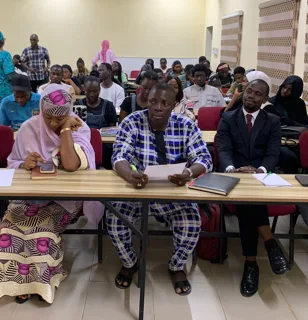
MOVE BEYOND SOCIAL MEDIA ACTIVISM, UNIABUJA DONS TELL YOUTHS
Senior lecturers in the Department of Political Science and International Relations at the University of Abuja, now Yakubu Gowon University, have urged Nigerian youths to move beyond social media activism and become active participants in politics ahead of the 2027 general elections.
The lecturers warned that Nigeria’s democracy would remain weak unless young people directly engage in governance.
The call was made in a report released on Friday by the Rosa Luxemburg Foundation for Peace and Development following a democracy conference organised in partnership with the Department of Political Science and International Relations, University of Abuja.
The report, obtained by our correspondent on Friday, focused on “Youth Political Participation and Democratic Consolidation in Nigeria” and “Digital Politics, Electoral Integrity and Peace-building in Contemporary Nigeria.”
It identified the high cost of politics, electoral violence, political godfatherism, poverty and weak institutions as major barriers preventing young Nigerians from taking up leadership positions.
The report also warned that although social media had expanded civic awareness among young people, digital activism alone could not strengthen democracy without active political participation.
Delivering the welcome address, Professor Yusuf Zoaka, a lecturer in the Department of Political Science and International Relations, University of Abuja, said democracy was expected to grow through transparency and accountability but noted that democratic governance had continued to decline.
Zoaka said one of the biggest challenges confronting Nigerian youths was their greater engagement with social media compared with the political process.
“Youths must engage beyond social media and voting. They should become active participants in democratic governance and nation-building,” he said.
In her goodwill message, the Country Director of the Rosa Luxemburg Foundation for Peace and Development, Angela Odah, said young people would play a decisive role in determining the credibility of the 2027 general elections.
“As Nigeria prepares for the 2027 general elections, young people, who constitute the majority of the country’s population, have a vital role to play in promoting credible and democratic elections,” Odah said.
She added that elections should not be viewed as a one-day exercise but as a process beginning with voter registration, political party primaries and campaigns through vote collation and declaration of results.
“Every stage of the electoral process must be transparent, peaceful and inclusive, free from electoral violence, vote-buying and other forms of manipulation that undermine democratic governance,” she added.
Presenting the lead paper, Professor Samson Adeniji said democracy could only thrive when citizens actively participated in governance.
According to him, political participation extends beyond voting to include contesting elections, joining political parties, election observation, advocacy, peaceful protests and civic engagement.
Despite increased youth involvement through digital activism and civic campaigns, Adeniji said structural barriers continued to prevent young Nigerians from assuming leadership positions.
“The high cost of politics, political godfatherism, electoral violence, poverty, unemployment and weak internal party democracy continue to hinder meaningful youth participation,” he said.
He noted that although the **Not Too Young To Run Act** had created more opportunities for young people to contest elections, many still lacked the financial resources, political networks and institutional support needed to compete effectively.
Adeniji called on governments to introduce youth-friendly policies, expand youth appointments and tackle unemployment, while urging political parties to reduce nomination fees and strengthen internal democracy.
“Nigeria’s democratic consolidation depends on the active participation of its youth, who should be regarded not merely as the leaders of tomorrow but as indispensable partners in shaping the country’s democratic future,” he said.
Also, Dr Uchenna Umeorekwu, a lecturer in the department, linked vote-buying to worsening poverty and unemployment.
“As long as economic hardship persists, many voters will remain susceptible to inducements from political actors,” he said, calling for broader economic reforms alongside electoral reforms.
On digital politics, Professor Saleh Dauda said digital technologies had transformed political engagement but also created fresh risks through misinformation and cyber manipulation.
“Digital platforms can facilitate the rapid dissemination of misinformation and fake news capable of undermining electoral integrity and deepening political divisions,” Dauda warned.
He maintained that digital politics could improve electoral transparency only when supported by credible institutions, effective regulation and sustained peace-building initiatives.
Similarly, Professor Magdalene said electoral technologies such as the Bimodal Voter Accreditation System had strengthened Nigeria’s electoral process by reducing incidents of over-voting and manual manipulation of election results.
However, she cautioned that technology alone could not guarantee credible elections.
“While digital tools have addressed certain forms of electoral malpractice, challenges such as vote-buying continue to undermine electoral integrity,” she said.
The report recommended reducing the cost of politics, strengthening electoral institutions, improving civic education, expanding youth inclusion in governance and increasing women’s participation in politics.
It also urged young Nigerians to reject vote-buying, register as voters, join political parties, build leadership capacity and participate actively in governance instead of limiting their engagement to social media.
Young people account for a significant proportion of Nigeria’s estimated 230 million population, yet they remain underrepresented in elective and appointive offices.
Although the Not Too Young To Run Act, signed into law in 2018, lowered the constitutional age requirement for several elective positions, analysts say high nomination fees, weak internal party democracy, political godfatherism and electoral violence continue to limit youth participation.
As preparations gradually begin for the 2027 general elections, the Independent National Electoral Commission and several civil society organisations have intensified campaigns encouraging eligible Nigerians, particularly young people, to register to vote, reject vote-buying and participate actively in the democratic process.
The conference report argued that meaningful youth engagement, stronger institutions and credible elections would be critical to deepening Nigeria’s democracy.