


NEWS XTRA
MASTERCARD CHAMPIONS A MORE CONNECTED DIGITAL FUTURE FOR AFRICA AT GITEX NIGERIA 2026
Mastercard used GITEX Nigeria 2026 to highlight the need for stronger digital connectivity, financial innovation, local technology capabilities and cybersecurity across Africa.
The event, held in Abuja and Lagos from August 31 to September 3, brought together discussions on digital government, technology ownership, financial innovation and cybersecurity, with Mastercard executives highlighting key areas needed to build a more connected and inclusive digital economy.
Mastercard also hosted stakeholders at its exhibition booth, including the Deputy Governor of Lagos State and the United States Consul General, reinforcing the importance of collaboration between the public and private sectors.
A major focus was digital interoperability, particularly the need to connect systems for digital identity, real-time payments and government services so they can work together rather than operate independently.
Kari Tukur, Vice President, Core Payments, West Africa, Mastercard, said identity, payment and service-delivery systems should be designed to work together from the beginning to provide smoother digital experiences for citizens and businesses.
The company cited its Community Pass platform as an example of how connected digital infrastructure can support economic participation. The platform uses secure digital credentials to connect underserved communities with financial institutions, governments and service providers, helping farmers and small traders build digital profiles that can support access to payments, markets and financial services.
Another area of discussion was the need for African countries to move beyond simply adopting foreign technology towards developing stronger local capabilities.
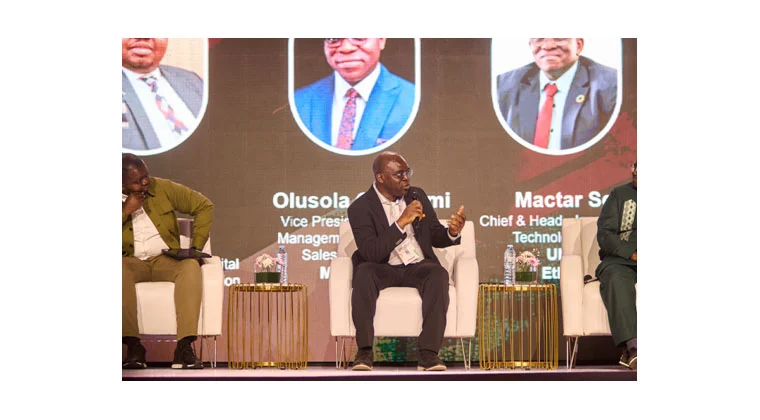
Olusola Olakanmi, Vice President, Account Management and Head of Sales, West Africa, Mastercard, said global partnerships could help accelerate access to technology, infrastructure and expertise, but their longer-term value should also include developing local skills, infrastructure and businesses.
The company said this approach included capability transfer, engineering and cybersecurity skills, product development and greater participation by local suppliers.
Mastercard also highlighted the importance of financial infrastructure in allowing innovations from Africa's fintech ecosystem to expand beyond pilot projects.
At a session titled “Africa’s Financial Reset: The New Architecture of Money, Markets and Movement,” Unwana Esang, Vice President, Service Business Development, Mastercard, discussed the role of infrastructure, trust and cooperation in scaling financial innovation.
The discussion also examined how interoperability could reduce the cost and complexity of connecting banks, fintech companies, mobile-money operators and emerging payment systems, particularly for cross-border commerce, remittances and business transactions.
Mastercard said its Mastercard Move service supports money movement across more than 200 countries and territories and more than 150 currencies, connecting bank accounts, cards, digital wallets and cash endpoints.
The company also pointed to the role of artificial intelligence in financial services, including the use of AI to assess transaction risks and help identify suspicious activity while allowing legitimate transactions to proceed.
Cybersecurity was another major theme at the event, with Mastercard stressing that trust, fraud prevention, data protection and consumer confidence must be incorporated into digital infrastructure as services become increasingly connected.
At its cybersecurity workshop, Mastercard examined the changing cyber threat landscape, AI-related risks and the need for organisations to strengthen resilience as they adopt emerging technologies.
Can Elbeyli, Senior Vice President, Security Solutions, EEMEA, Mastercard, said organisations needed to integrate cybersecurity, fraud prevention and resilience into their wider digital transformation strategies.
Mastercard said interoperability, local capability, financial infrastructure and cybersecurity were interconnected elements of Africa’s digital development, with each contributing to a more reliable and inclusive digital ecosystem.
The company said Africa’s digital opportunity extended beyond putting services online or increasing digital transactions, stressing the need to create conditions that allow digital participation to generate broader economic opportunities.
Gabriel Swanepoel, Division President, Africa at Mastercard, said partnerships involving technology, innovation and local expertise would be important in shaping Africa’s digital future.
He said GITEX Nigeria provided a platform for innovators, entrepreneurs and organisations involved in Africa’s digital transformation to build connections and support the development of a more connected, inclusive and trusted digital economy.