


JUDICIARY WATCH
LESSONS FROM US VISA BAN ON SUPREME COURT JUSTICES
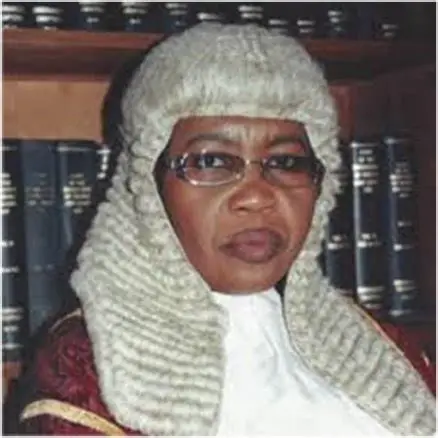
Nigeria’s judiciary has come under renewed scrutiny following revelations by retiring Supreme Court Justice Uwani Abba-Aji that the United States imposed visa restrictions on members of a seven-man Supreme Court panel over a controversial judgment.
Abba-Aji made the disclosure during her valedictory session at the Supreme Court in Abuja, describing the restrictions as one of the difficult experiences she encountered during her judicial career. She said the travel ban remained in force, although she did not identify the judgment responsible.
The revelation has renewed attention on the Supreme Court’s January 14, 2020 judgment that overturned the election of Emeka Ihedioha as Imo State governor and declared Hope Uzodimma of the All Progressives Congress winner of the 2019 governorship election.
The judgment generated widespread controversy after the court ordered the inclusion of results from 388 polling units, which significantly altered the final outcome. The decision attracted criticism from political stakeholders and legal observers, who questioned the handling of the disputed results.
The PUNCH Editorial Board, in its assessment of the development, argued that the reported visa restrictions should serve as a warning about the importance of judicial integrity, independence and accountability.
It also cited other controversial judicial decisions, including rulings involving former Senate President Ahmad Lawan, Senate President Godswill Akpabio and former Abia State Governor Orji Kalu, as examples of cases that have raised questions about public confidence in the justice system.
The editorial stressed that judicial officers must remain independent of political influence and ensure that their decisions are guided strictly by the law rather than personal interests or external pressure.
It further called on the National Judicial Council to strengthen its disciplinary mechanisms, investigate allegations of misconduct transparently and ensure that no judicial officer is above accountability.
The board also recommended reforms to make judicial appointments more transparent and less vulnerable to political interference, including greater public participation and stronger emphasis on professional competence and integrity.
With the 2027 general elections approaching, the editorial warned that public confidence in the courts would be critical to the credibility of Nigeria’s democratic process.
It concluded that the strength of the judiciary does not rest merely on its constitutional authority but on the integrity, impartiality and courage of those entrusted with dispensing justice.