


NEWS XTRA
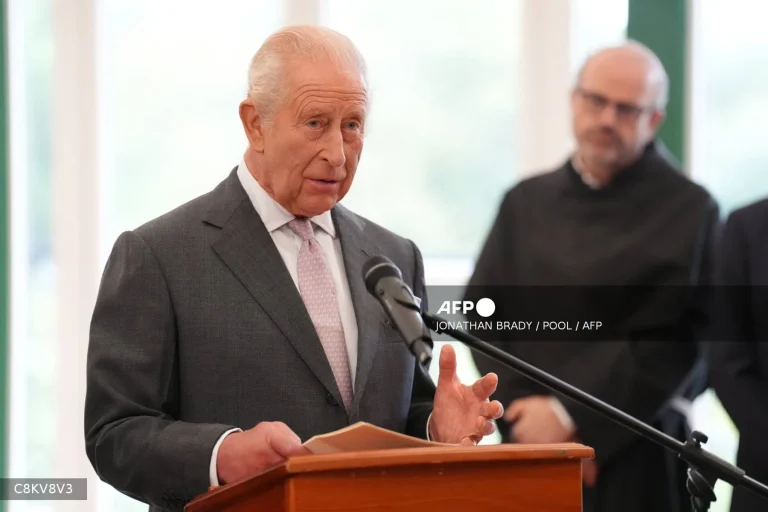
KING CHARLES WARNS TECH BOSSES OF ‘EXISTENTIAL DANGERS’ OF AI
King Charles III has warned technology leaders about the “existential dangers” of artificial intelligence falling into the wrong hands and being used in potentially catastrophic ways.
The British monarch issued the warning on Thursday during a conference bringing together senior figures from the artificial intelligence sector and government at Dumfries House in Scotland.
The gathering included representatives from Nvidia, Google DeepMind, OpenAI, Anthropic and Britain’s minister for artificial intelligence.
Charles said there was an urgent need to properly consider the risks associated with advanced AI technologies and ensure they remain under human control.
“There seems urgency in adequately considering the existential dangers of such technologies falling into the wrong hands and being used in potentially catastrophic ways,” he said.
The King also urged technology leaders to reassure the public that the development of AI would not undermine humanity’s ability to determine its own future.
“Those in our world who value our humanity and its vital moral component are anxiously seeking your reassurance that we will not lose control of our destiny,” Charles said.
He called on the technology sector to ensure that AI remains focused on serving humanity, communities and the natural environment.
Among those attending the conference were Google DeepMind chair Demis Hassabis, Nvidia chief executive Jensen Huang and OpenAI Chief Financial Officer Sarah Friar.
Vatican AI adviser Paolo Benanti and Israeli author and historian Yuval Noah Harari were also present at the meeting.
Buckingham Palace said the conference was expected to begin a process aimed at developing common principles to guide the development and use of artificial intelligence.
However, no formal agreement was expected at the end of the four- to five-hour meeting involving technology executives and other influential figures.
Although Charles opened the conference, he was not expected to participate in the discussions.
He urged participants to explore ways of harnessing AI while putting safety at the centre of its development and called for greater international cooperation so that no country would be left behind.
The meeting came amid growing concerns about the rapid advancement of AI, including potential job losses, rising energy consumption and the environmental impact of data centres.
Concerns have also increased over the possibility of AI agents operating beyond the control of their developers.
DeepMind’s Hassabis warned that mistakes in AI development could result in serious consequences, pointing to recent incidents involving rogue AI agents.
“The chance of something bad accidentally happening, if we get things wrong, is definitely non-zero,” Hassabis said.
He added that recent cyber incidents involving rogue AI agents could be an early indication of more serious risks, including potential biological and nuclear threats.
Nvidia’s Huang, however, highlighted the potential benefits of AI in areas such as scientific research and medicine, as well as its ability to create employment in new industries.
He urged what he described as “responsible optimism” and called for some of the concerns surrounding the technology to be separated from what he termed myths.
The debate over AI safety has intensified following calls from some technology leaders for the pace of development to be slowed to allow companies to better understand potential risks.
Anthropic CEO Dario Amodei recently called for a slowdown in AI development, receiving support from OpenAI CEO Sam Altman and Elon Musk.
US President Donald Trump and members of his administration have, however, continued to oppose measures that could significantly restrict the sector, citing concerns that excessive regulation could give China an advantage.
Meta chief executive Mark Zuckerberg has also rejected calls to slow AI development, arguing that market competition and the threat of litigation can provide safeguards.