


INTERNATIONAL
IRAQ ANNOUNCES PLANS TO REOPEN IRAN BORDER CROSSINGS AFTER DRONE ATTACK
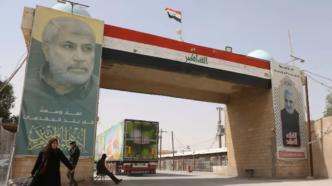
Iraqi authorities have announced plans to reopen three border crossings with Iran after temporarily shutting them following a drone attack on a major Saudi oil pipeline. The crossings were closed as part of an emergency security response after Iraqi and Saudi authorities said the drones involved in the attack had been launched from Iraqi territory. The closures affected movement along important routes linking the two neighbouring countries and came as Baghdad intensified efforts to identify those behind the attack.
The decision to close the crossings followed a Friday night attack on Saudi Arabia’s East-West oil pipeline, which caused damage and injuries and raised fresh concerns about the wider regional security situation. Iraqi authorities subsequently determined that the drones were launched from Maysan Province, which borders Iran. In response, Prime Minister Ali al-Zaidi dismissed the military commander in Maysan and ordered investigations into how the attackers were able to operate from the area.
The three crossings temporarily affected were Shalamcheh in Basra Province, al-Shib in Maysan and al-Mandali in Diyala Province. Iraqi security officials said the closures were necessary to allow security agencies to reorganise operations, strengthen intelligence gathering and prevent those responsible for the drone attack from escaping through the border routes. Security forces also reportedly discovered drone launchers near the Iraqi-Iranian border around the al-Tib area of Maysan, close to the al-Shib crossing.
Iraq has also agreed to cooperate with Iran in investigating the discovery of the suspected drone launch platforms. The Iraqi government said security agencies had stepped up intelligence operations to determine how the border was breached and identify those responsible for the attack. Although some powerful Iran-backed armed groups operate inside Iraq, no group has publicly claimed responsibility for the Saudi pipeline attack, while an alliance of Tehran-backed Iraqi groups has denied carrying out the strike.
The planned reopening of the crossings is expected to restore normal movement between Iraq and Iran while allowing Baghdad to maintain tighter security checks along the border. The incident has nevertheless increased pressure on the Iraqi government to prevent its territory from being used for attacks against neighbouring countries. With tensions already high across the Middle East, Iraqi authorities are facing the difficult task of maintaining relations with Iran while also reassuring Saudi Arabia and other regional states that Iraq will not become a launchpad for attacks against their territory.