


BREAKING NEWS
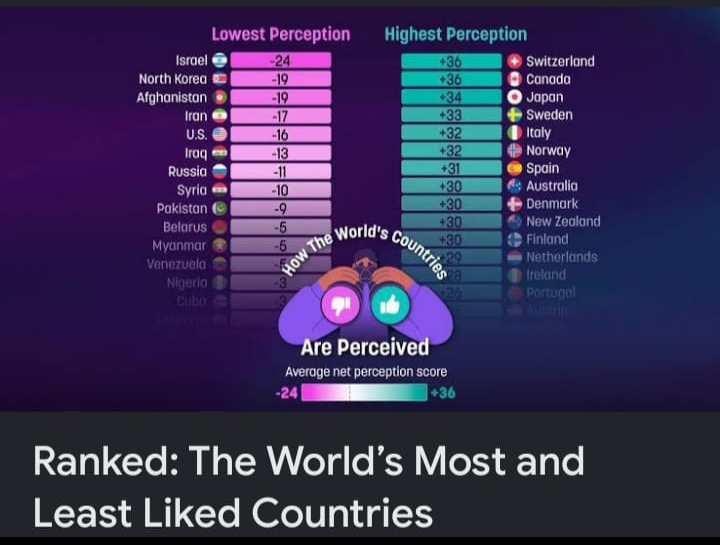
GLOBAL PERCEPTION SURVEY SHOWS SHARP DECLINE IN IMAGE OF NIGERIA, U.S., RUSSIA IN 2026 RANKINGS
A new global perception survey has revealed a significant drop in how countries such as Nigeria, the United States, and Russia are viewed internationally, sparking discussions on shifting global reputation trends in 2026.
The report, which assessed international sentiment across multiple regions, indicates that public perception of several major economies has declined compared to previous years, reflecting growing concerns around politics, security, and economic stability.
Nigeria reportedly recorded a noticeable dip in global perception, with respondents citing issues such as insecurity, governance challenges, and economic pressure as key influencing factors.
Similarly, the United States and Russia also experienced reduced favourability ratings, with analysts linking the decline to geopolitical tensions, foreign policy decisions, and global conflicts that have shaped international opinion.
Experts say the findings highlight how global reputation is increasingly influenced by media coverage, diplomatic relations, and domestic policy outcomes.
The survey further suggests that emerging economies and smaller nations are gradually gaining improved perception scores, as global attention shifts toward diversification of alliances and development models.
International relations observers note that perception trends can impact tourism, foreign investment, and diplomatic influence, making such rankings significant for policy direction.
The report has sparked debate among analysts, with calls for countries to strengthen public diplomacy and address internal challenges that shape global opinion.