


BUSINESS
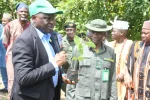
FRIN PROVIDES 5,000 SEEDLINGS TO RESTORE OBA HILLS PARK
The Forestry Research Institute of Nigeria has provided 5,000 indigenous tree seedlings as part of efforts to restore degraded habitats in the Oba Hills National Park, Osun State.
The seedlings form the first phase of a wider restoration programme targeting 11,000 indigenous seedlings to address vegetation loss, habitat disturbance, farming pressure and other human activities affecting the park.
The restoration initiative was formally inaugurated on August 26, 2026, with the participation of government agencies, conservation organisations, corporate partners and representatives of communities around the park.
The seedlings include species such as Parkia biglobosa, Adansonia digitata, Terminalia superba, Ceiba pentandra and Khaya senegalensis.
The Minister of Environment, Balarabe Lawal, represented by the Director-General and Chief Executive Officer of FRIN, Prof. Zacharia Yaduma, said ecological restoration required more than simply planting trees.
He stressed the importance of restoring the functions and resilience of degraded ecosystems through the use of indigenous species, natural regeneration and long-term habitat management.
The Acting Conservator of Parks at Oba Hills National Park, O.K. Azeez, said the park had suffered considerable degradation and habitat disturbance, making partnerships and community participation essential to its recovery.
The Nigerian Conservation Foundation also supported the initiative by facilitating an additional 5,000 seedlings from IHS Towers and 1,000 from Polaris Bank, while providing logistics for the exercise.
Stakeholders said the programme would help restore wildlife habitats, improve biodiversity, protect soil and water resources, increase carbon sequestration and strengthen the park’s resilience to climate and environmental pressures.
Community participation is also central to the programme, with the National Park Service working with the Oba Hills Farmers Association to reduce pressure on the park while helping farmers maintain their livelihoods.
Organisers said the focus would extend beyond planting to ensuring the survival and growth of the seedlings through continued maintenance, scientific monitoring, natural regeneration and habitat protection.