


CITY ROUND
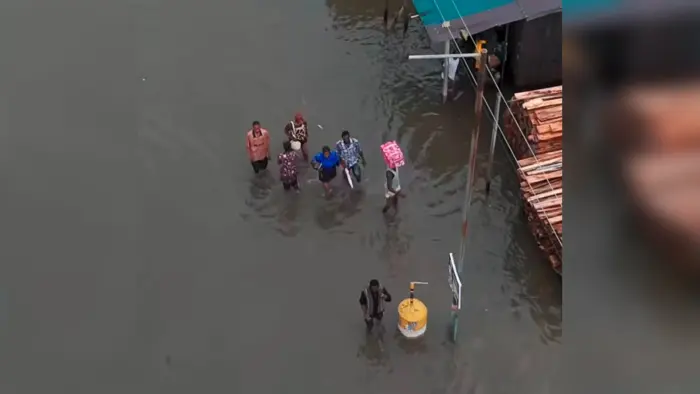
FLOOD: LAGOS RESIDENTS COUNT LOSSES, DEMAND LASTING DRAINAGE SOLUTIONS
When the rains finally eased over parts of Lagos, many residents expected the floodwaters to recede.
Instead, for people living in communities around Ogombo and Abraham Adesanya Estate in Eti-Osa, the nightmare lingered.
Days after the heavy downpour, streets remained submerged, homes were cut off, electricity was disconnected in some areas, and residents struggled to resume their normal lives.
For many, the disaster exposed not only the devastating impact of climate-related flooding but also years of poor drainage, blocked canals and unchecked development.
For Eunice Akintola, who moved to Ogombo barely a year ago, the flood changed everything.
“It was my first experience of flooding since I moved there, and I never want to go through it again,” she said.
According to her, roads became impassable, leaving residents stranded as commercial vehicles stopped operating. Canoes suddenly became the only means of transportation.
“Normally, you pay about N500 for transportation, but canoe operators were charging as much as N2,500 for a very short distance. It was the only way to move around,” she recalled.
The situation became so difficult that Akintola temporarily abandoned her home to stay with her sister on New Road so she could continue going to work.
“I couldn’t commute from Ogombo because everywhere was flooded. I only returned home after work because I was on leave.”
The flood also invaded residential compounds, forcing families to raise furniture and household appliances on makeshift platforms in desperate attempts to save them from water damage.
Even access to clean drinking water became a challenge. “People couldn’t easily go out to buy water because everywhere was flooded,” she said.
The experience also altered housing plans. “We just moved into the house last year, but we are already planning to leave. I won’t renew my rent. I don’t want to experience this again,” she said.
She accused some residents of worsening the situation by dumping refuse into drainage channels and canals, saying, “People carry their waste from home and dump it inside the canals. Even when there is no rain, the roads remain flooded because the waterways are blocked.”
She urged the Lagos State Government to make proper drainage compulsory before approving new housing developments.
“You shouldn’t be allowed to build without constructing proper drainage. Government should enforce it. There should also be stricter sanitation enforcement to stop indiscriminate dumping of refuse.”
Beyond clearing blocked canals, she said authorities should widen waterways and rehabilitate damaged drainage systems to allow floodwater to flow freely.
Although she believes Ogombo remains a valuable place to own property because of its strategic location, she admitted that if she owned a house in the flood-prone area, she would consider selling it.
“As a tenant, I can move. But if I owned property there after this experience, I would probably sell.”
Another resident, identified simply as Esther, who had travelled to visit family around Abraham Adesanya Estate, said what was meant to be a five-day visit stretched into a week because floodwaters made movement impossible.
According to her, navigating the flooded roads was an exhausting ordeal. “The drainage system is very poor. The canals are filled with refuse, so water cannot flow properly.”
She recalled that a relative had to lead them through an alternative route inside a private estate with well-maintained drainage.
“The difference was obvious. Inside that estate, there was no flooding because the drainage system was working properly.”
Outside the estate, however, the situation changed dramatically.
“The access road was completely flooded. A journey that should have taken about 30 minutes lasted almost one and a half hours.”
She added that one of their neighbours had his vehicle damaged after driving through floodwater and was searching for a mechanic to repair it.
Residents also endured prolonged power outages after electricity supply was disconnected over fears of electrocution.
The experiences of residents underscore the growing vulnerability of many Lagos communities to seasonal flooding, despite repeated government assurances and emergency interventions.
While Governor Babajide Sanwo-Olu recently visited some affected communities, many residents insist that emergency visits alone will not solve the recurring crisis.
They called for sustained investment in drainage infrastructure, routine desilting of canals, stricter enforcement against illegal waste disposal and better urban planning to prevent buildings from obstructing natural waterways.
Experts have repeatedly warned that as climate change brings more intense rainfall, flood-prone communities across Lagos could face even greater risks unless preventive measures are urgently implemented.
For families in Ogombo and surrounding communities, the memory of the flood is still fresh.
Their greatest fear is not what happened this year but the possibility that, without decisive government intervention, the next rainy season could bring an even bigger disaster.