


GOVERNMENT & POLICY
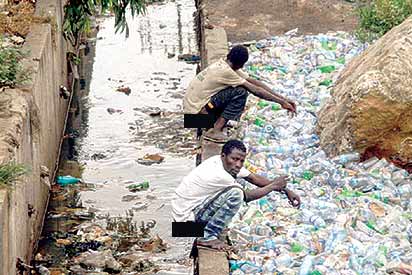
FG ISSUES EXECUTIVE ORDER TO END OPEN DEFECATION BY 2030
The Federal Government has unveiled a Presidential Executive Order aimed at strengthening Nigeria’s legal and institutional framework for ending open defecation by 2030.
The order, signed by President Bola Tinubu, was formally unveiled by Vice-President Kashim Shettima on Thursday in Abuja during activities marking the 2026 World Toilet Day and the seventh anniversary of the Clean Nigeria: Use the Toilet Campaign.
Shettima, represented by the Senior Special Assistant to the President on Delivery and Coordination, Akubo Adegbe, said the Executive Order would strengthen coordination among government institutions and ensure greater accountability in the implementation of sanitation programmes.
He disclosed that 185 of Nigeria’s 774 local government areas had attained Open Defecation-Free (ODF) status since the Clean Nigeria campaign began in 2019. Jigawa and Katsina remain the only states to have achieved statewide ODF status.
He, however, warned that the country still had significant ground to cover, urging states to establish monthly and quarterly targets and make their progress publicly available.
The Vice-President also cautioned against communities that had achieved ODF status returning to open defecation, stressing the need for sustained monitoring and adequate funding.
Minister of Water Resources and Sanitation, Joseph Utsev, said the government had strengthened its implementation framework through the Revised Clean Nigeria Strategy 2025–2030, which focuses on six strategic areas: enabling environment, partnerships and coordination, public finance, service delivery, advocacy and communication, and monitoring and accountability.
He also highlighted the introduction of the Clean Nigeria Real-Time Monitoring and Information System to improve data management, track implementation and strengthen accountability.
Meanwhile, the UNICEF Chief of Water, Sanitation and Hygiene, Emily Rand, called for accelerated efforts, urging governments and stakeholders to increase sanitation financing and ensure that households have access to durable and climate-resilient toilet facilities.
She stressed that access to sanitation was essential for protecting children's health and dignity.
The Federal Government also called on state and local governments, traditional rulers, community leaders, development partners, civil society organisations and the private sector to support the campaign.
The Executive Order is expected to strengthen stakeholder participation and institutional responsibility as Nigeria works towards eliminating open defecation nationwide by 2030.