


BUSINESS
FG CALLS FOR STRONGER POWER GRID AS NIGERIA PUSHES ENERGY SECURITY AGENDA
The Federal Government has called for greater attention to the resilience of electricity grids, describing reliable power infrastructure as an increasingly important component of national and global energy security.
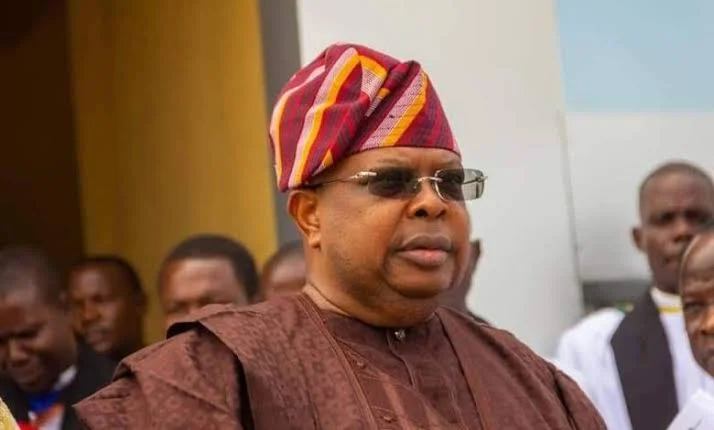
The Minister of Power, Joseph Tegbe, made the call while delivering a keynote address at the opening plenary of the Middle East Energy 2026 Leadership Summit in Dubai. He spoke on the theme, “Energy Security and the Effect of Geopolitics,” during the 50th edition of the summit.
Tegbe argued that the changing global energy environment had made dependable electricity infrastructure a strategic priority for countries. He said energy security should no longer be assessed only by the availability of oil and gas reserves, but by the ability of an entire energy system to withstand economic, geopolitical and other forms of disruption.
According to the minister, the resilience of power grids, critical mineral supply chains, availability of capital and the strength of institutions must all be considered when determining whether a country has a secure energy system.
He explained that the ability to maintain electricity supplies to homes, hospitals, businesses and industries during periods of geopolitical or economic pressure should be treated as a matter of strategic importance.
Tegbe also outlined Nigeria’s approach to reforming its electricity sector, saying the government was working to create an environment capable of attracting long-term investment. He identified regulatory certainty, respect for contracts and reliable offtake arrangements as essential conditions for investors seeking to commit capital to the power sector.
The minister said Nigeria’s energy strategy was based on diversification rather than diplomatic disengagement, adding that countries needed multiple sources and pathways of energy supply to reduce their exposure to external shocks.
He also argued that affordability should be regarded as part of energy security. According to him, an energy system cannot be considered secure if electricity remains inaccessible or unaffordable to large sections of the population.
Tegbe further called for an orderly and fair global transition to cleaner energy, stressing that the transition must take into account the different circumstances and development needs of individual countries rather than applying a single approach to all economies.
Highlighting Nigeria’s position in the international energy market, the minister pointed to the country’s more than 200 trillion cubic feet of proven natural gas reserves. He also referenced Nigeria’s long-standing record of supplying liquefied natural gas to markets in Europe and Asia.
He said Nigeria’s gas resources could play an important role in strengthening both domestic and international energy security, particularly as countries seek to balance energy transition goals with the need for reliable and affordable power.
The minister described the Electricity Act 2023 as one of the most significant reforms in Nigeria’s power sector in decades. He noted that the legislation ended the Federal Government’s longstanding monopoly over electricity generation and distribution and opened the way for the emergence of 37 electricity markets across the federation.
Tegbe said the reforms being implemented under President Bola Tinubu were intended to provide a stronger foundation for investment and improve the structure of the electricity market.
He maintained that Nigeria’s experience could offer useful lessons to other developing economies attempting to reform their energy sectors and attract private capital.
The minister also stressed the importance of policy stability to investment, arguing that investors are capable of assessing and pricing risks but become more reluctant to commit funds when government policies or contractual conditions can change unexpectedly.
Turning to Africa, Tegbe said the continent should be considered a central player in global energy geopolitics rather than being treated as a peripheral participant. He noted that about 600 million Africans still lack access to electricity, highlighting the enormous investment opportunity created by the continent’s energy deficit.
He identified Africa’s mineral resources, abundant solar potential, youthful population and rapidly expanding energy demand as factors that would increasingly influence global energy security in the coming decades.
The minister urged international partnerships to move beyond the extraction of Africa’s raw resources. He called for cooperation that would promote local processing, manufacturing, skills development and the provision of long-term capital to support sustainable energy and industrial development.
According to Tegbe, Nigeria and other African countries should seek partnerships that create value within their economies instead of simply exporting raw materials and importing finished products.
He invited international investors and development partners to participate in the expansion of Africa’s energy infrastructure, saying Nigeria had chosen to pursue infrastructure development and was prepared to work with global partners to achieve that objective.
The minister is expected to participate in additional engagements in Dubai during the week, including a ministerial fireside session focused on financing Africa’s power future under the summit’s Africa Spotlight programme.
The Federal Government’s position comes amid continued efforts to strengthen Nigeria’s electricity system and attract investment into the power sector. The emphasis on grid resilience reflects the growing recognition that generation capacity alone is insufficient without dependable transmission and distribution infrastructure capable of delivering electricity to consumers.
Tegbe’s remarks therefore placed electricity reliability, affordability, infrastructure resilience and investment certainty at the centre of Nigeria’s broader energy-security strategy.