


BUSINESS &ECOMONY
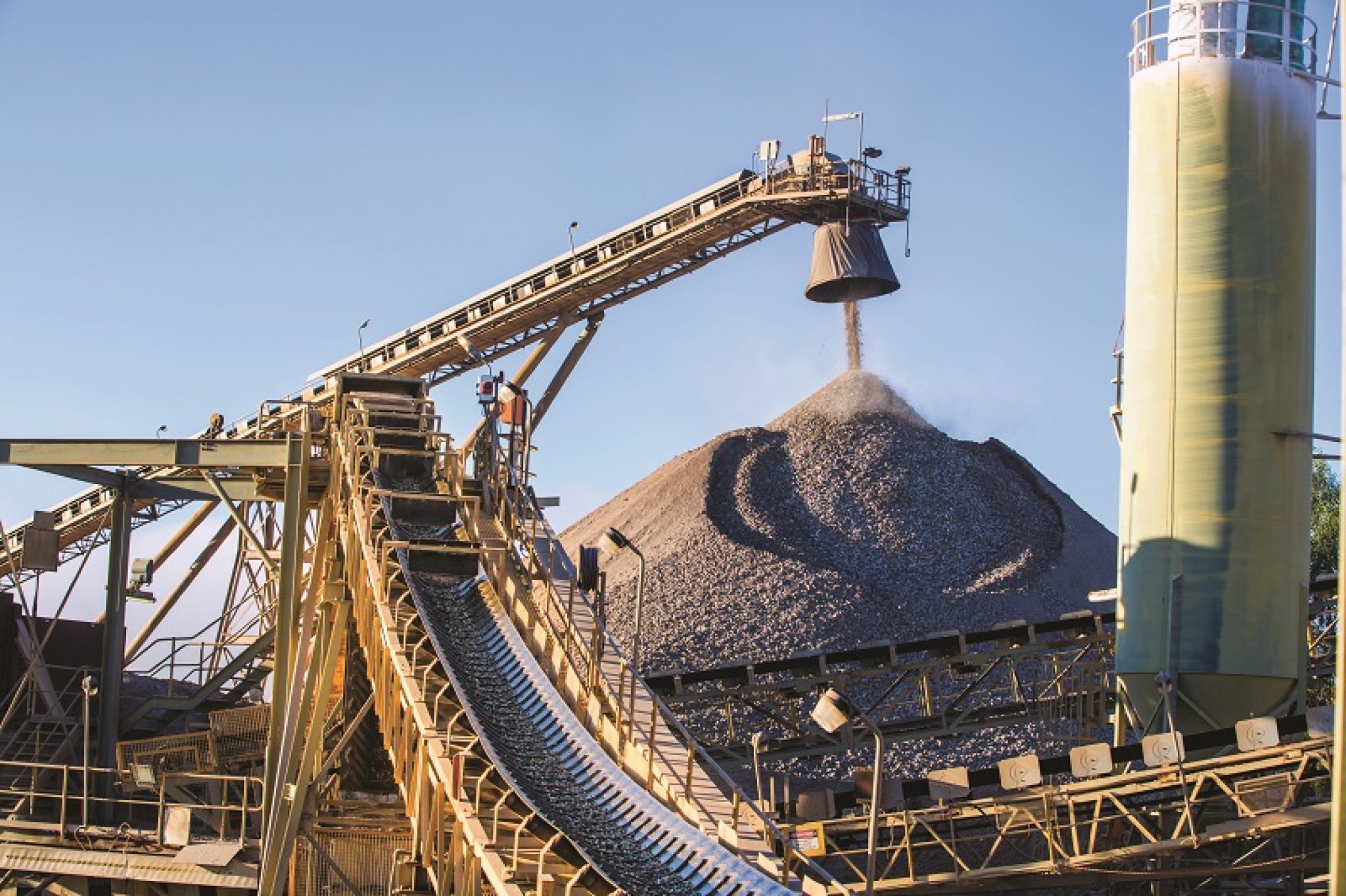
FG BUDGETS ₦6.04BN IN PAYROLL COSTS FOR IDLE AJAOKUTA STEEL
The Federal Government has earmarked N6.04 billion for personnel costs at Ajaokuta Steel Company Limited (ASCL) in the 2026 budget, even though the steel plant has yet to produce a single sheet of steel since its conception more than 40 years ago.
Details from the 2026 Appropriation Bill show that ASCL received a total allocation of N6.69 billion for the year, with personnel costs alone accounting for about 90.4 percent of the total. This underscores the company’s enduring status as a non-performing public enterprise primarily sustained by staff salaries.
Of the personnel allocation, N4.79 billion is for salaries and wages, while N1.25 billion covers allowances and social contributions, including N479.42 million for employer pension contributions, N239.71 million for NHIS, and N59.82 million for employees’ compensation insurance. Regular allowances alone account for N468.9 million. In contrast, overhead costs are set at N233.63 million, and capital expenditure at just N410.8 million, reflecting minimal investment in reviving production or completing the steel complex.
Year-on-year comparisons indicate that while personnel spending remains high, it represents only a marginal adjustment from previous allocations. In the 2025 budget, N6.21 billion was earmarked for salaries at ASCL, up from N4.29 billion in 2024, despite continued inactivity—a 44.76 percent increase highlighting recurrent expenditure growth independent of output.
The 2026 recurrent expenditure totals N6.28 billion, compared with capital spending of N410.8 million, meaning less than seven percent of the allocation is directed towards assets, rehabilitation, or infrastructure. Capital provisions include N56.4 million for fixed asset purchases such as computers, printers, and security equipment, N129.2 million for facility construction, and N225.2 million for rehabilitation and repairs, mainly for electricity systems and office buildings.
These allocations are insufficient to revive a heavy industrial complex intended to underpin Nigeria’s steel and manufacturing sector. The budget also shows that ASCL will generate no independent revenue and receive no grants, making it fully dependent on federal allocations.
Despite its inactive status, the company continues to be linked to constituency-style capital projects, including solar street lighting, water facilities, road repairs, security lighting, and grants to market women and youths—projects unrelated to steel production.
The 2026 budget, however, does include a separate allocation for the revitalisation of ASCL and the National Iron Ore Mining Company (NIOMCO) under the Federal Ministry of Steel Development. N150.99 million is earmarked for ongoing revitalisation programmes, while N1.06 billion is set aside for project preparation aimed at investment mobilisation, covering feasibility studies, environmental and social impact assessments, and financial modelling. This is lower than the N2.41 billion earmarked for similar preparations in 2025, when N250.98 million was allocated for revitalisation efforts.
Conceived in 1979 as Nigeria’s flagship industrial project, the Ajaokuta Integrated Steel Complex was intended to drive upstream and downstream industrial growth, reduce steel imports, and diversify the economy. More than 40 years later, the project functions largely as a payroll entity, with salaries funded by successive governments while production remains zero.
The company currently claims to employ about 3,000 people, though the full commissioning of the plant was expected to create direct employment for 10,000 staff and indirectly engage over 500,000 workers in supporting industries. The steel complex consists of four rolling mills—the Billet Mill, Light Section Mill, Wire Rod Mill, and Medium Section and Structural Mill—utilising blast furnace technology, which accounts for roughly 70 percent of global steel production.
By 1994, the plant was reportedly 98 percent complete in equipment installation, and 40 of 43 planned units were constructed. However, mismanagement and delays have left the project incomplete more than 45 years later.
Efforts to revive the plant have included agreements with Russia in 2019 and ongoing discussions with Chinese investors since January 2024, though no tangible results have emerged. Over the past decade, the Federal Government has spent nearly N38.9 billion on salaries and allowances for ASCL staff, with allocations rising from N3.82 billion in 2014 to N3.94 billion in 2022, before dropping to N1.22 billion in 2023.
Investigations have revealed discrepancies in staff presence versus salary payments. Senator Natasha Akpoti-Uduaghan, representing Kogi Central, reported that during unscheduled visits to the complex, only a handful of workers were present despite substantial budgeted personnel costs.
The Ministry of Steel Development has indicated that more than N35 billion would be required to restart the Light Mill Section, with total revival costs estimated between $2 billion and $5 billion over three years. Memoranda of Understanding have been signed with Russian firms for rehabilitation and operation, although experts argue that privatisation could more effectively realise the plant’s potential.
Ajaokuta Steel Plant, long regarded as a cornerstone of Nigeria’s industrialisation, remains largely dormant, continuing to draw significant federal funding without contributing to steel production or broader industrial development.