


BUSINESS &ECOMONY
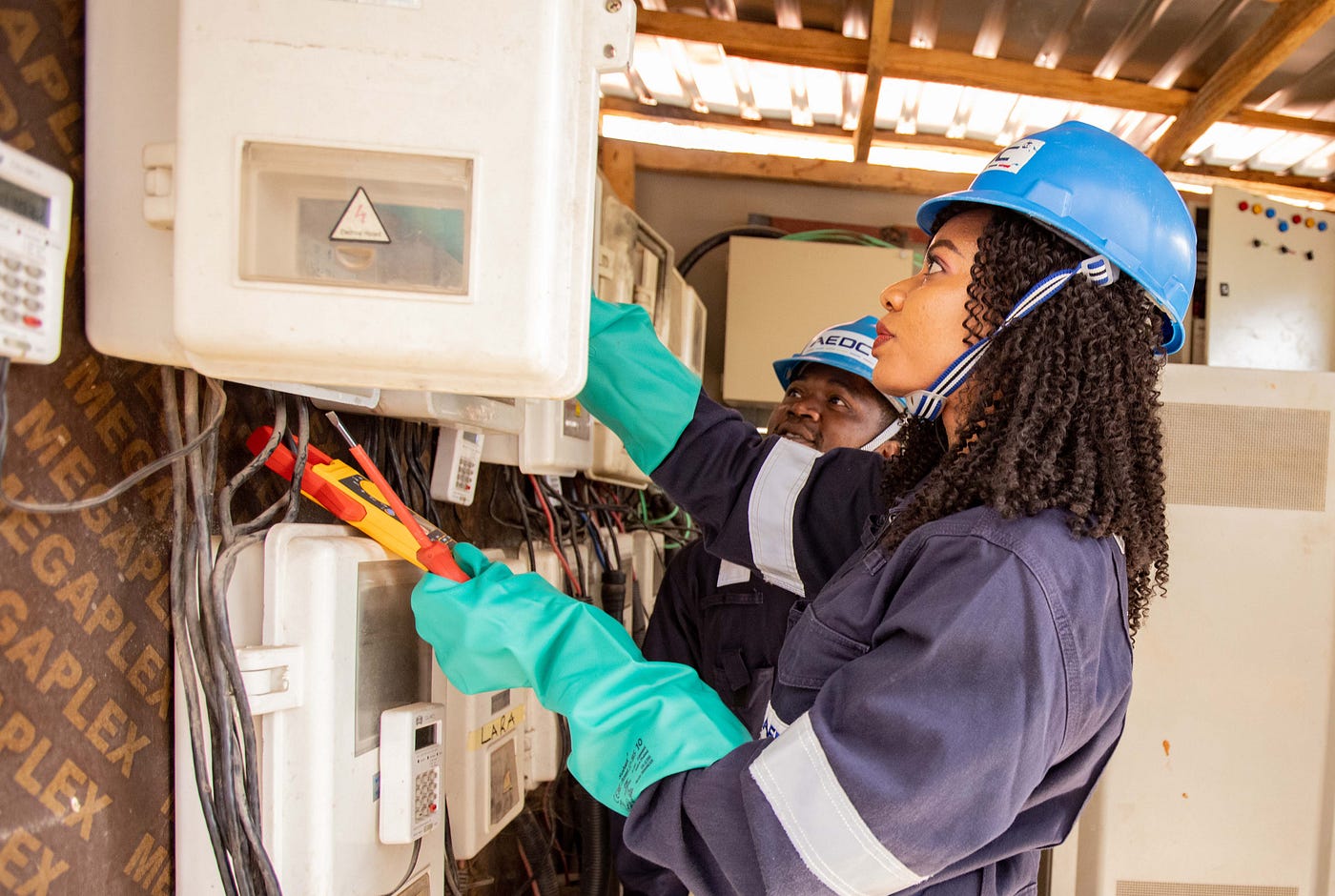
FG BANS METER INSTALLATION FEES, THREATENS SANCTIONS FOR DEFAULTERS
The Federal Government has prohibited electricity distribution companies (DisCos) and installers from collecting any fees for electricity meters, warning that officials found extorting customers will face prosecution.
The Minister of Power, Adebayo Adelabu, issued the warning on Thursday during an on-site inspection of newly imported smart meters at APM Terminals, Apapa, Lagos.
Adelabu explained that the meters, procured under the World Bank–funded Distribution Sector Recovery Programme (DISREP), must be installed for consumers free of charge. He emphasized that any request for payment would constitute an offense.
Receiving him at the Apapa Port Command of the Nigerian Customs Service, Area Controller Emmanuel Oshoba said Adelabu expressed satisfaction over the importation of 500,000 new smart meters under DISREP.
“The meters will be provided to all electricity consumers, irrespective of their customer band. I want to stress that it is unprecedented that these meters are to be distributed and installed free of charge. No one should collect money from consumers—it is illegal. Any official or installer requesting payment will be prosecuted,” Adelabu said.
He added that the initiative aims to improve billings and collections across the power sector. “This programme supports the government in importing a total of about 3.4 million meters in two batches. The first batch of 1.43 million meters has already seen nearly a million received and close to 150,000 installed nationwide. Today, we received almost 500,000 smart meters, marking the start of eliminating the meter gap in Nigeria.”
While expressing concern over the slow pace of metering, Adelabu expressed optimism that within a few years, every household, business, and institution would have meters, ensuring more transparent and fair billing, improved consumer payment readiness, and greater liquidity in the sector.
“This is historic. It is the first time the government is importing and purchasing meters at this scale to transform the power sector. Nigerians can see this is real action, not just promises,” the minister said.
Adelabu added that the government will closely monitor installations and establish a customer complaint desk to report any illegal payment demands. “We are creating an interface between installers and consumers to speed up installations. We are also maintaining a register of unmetered customers to validate data with DisCos and improve installation efficiency. Any confirmed cases of extortion will result in prosecution and public disclosure to deter others,” he stated.
He reaffirmed that the programme is inclusive, covering all categories of electricity consumers without discrimination by band.
Supporting the minister, the Director-General of the Bureau of Public Enterprises, Ayo Gbeleyi, assured that the bureau coordinates the DISREP implementation and monitors meter distribution. He added that the Nigerian Electricity Regulatory Commission will issue directives to ensure DisCos provide unhindered access for meter installations.
“The meters are designed for specific DisCos with anti-theft configurations. For example, a meter configured for Eko DisCo cannot be installed in Ibadan,” Gbeleyi explained.
Mojisola Abdul, Chairman of Mojec, said the meters are intended to generate more revenue and provide reliable power. “We have already installed nearly 150,000 meters free of charge. Consumers should not pay anyone. Through mobile registration, a meter can be installed within three days of registration,” she added.
Addressing concerns over previous delays and payments for meters, Adelabu reassured that the current programme ensures sufficient meter volume and free installation, removing past complications.
He also inspected the National Meter Test Station in Oshodi, where meters are tested by the Nigerian Electricity Management Services Agency to ensure compliance with standards. Currently, over five million customers in Nigeria are under estimated billing.