


GOVERNMENT & POLICY
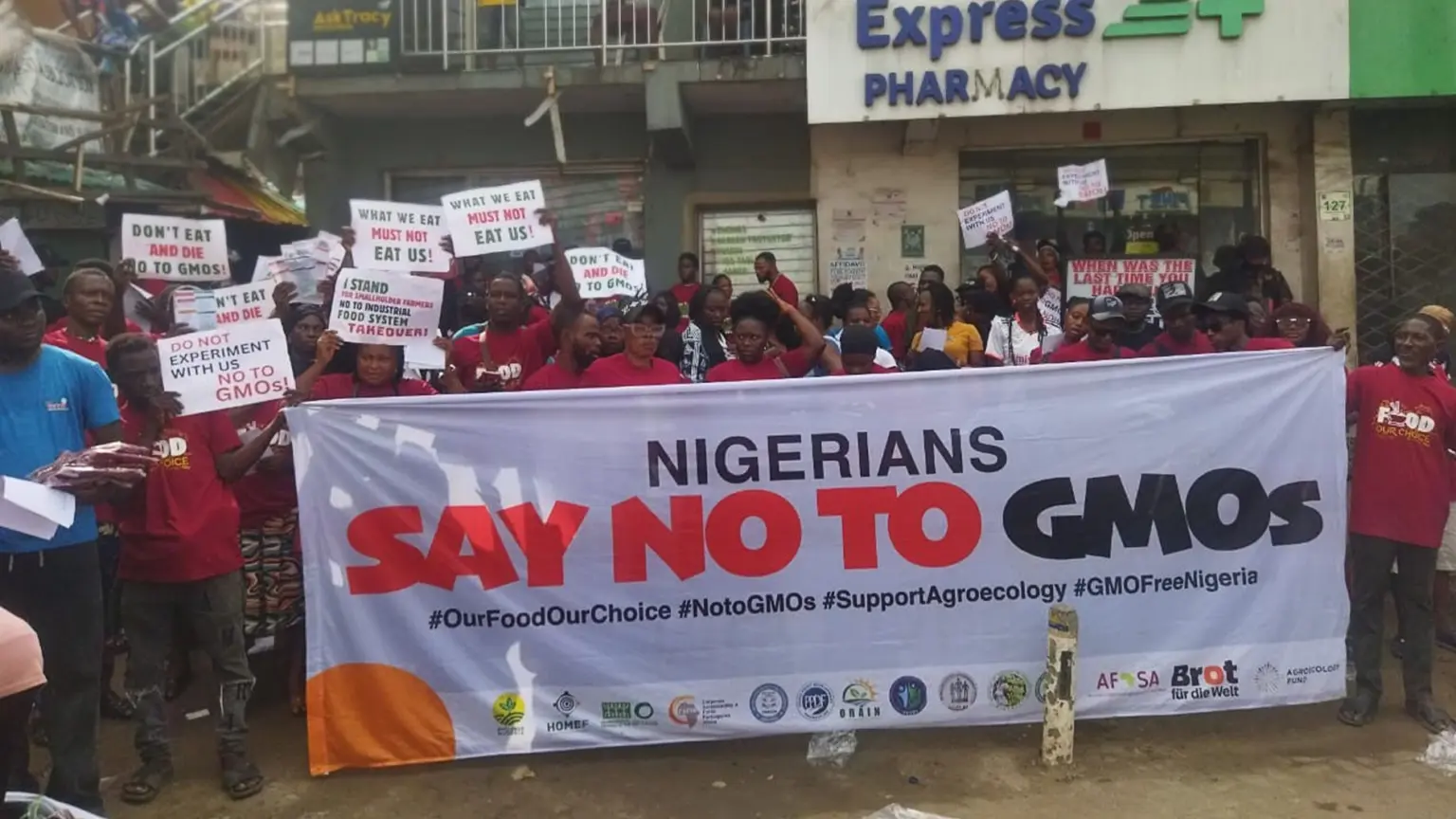
FARMERS, ACTIVISTS PROTEST GMOS, DEMAND PROTECTION OF INDIGENOUS SEEDS
Farmers, environmental activists and civil society groups have protested the growing adoption of genetically modified organisms (GMOs) in Nigeria, calling on the Federal Government to protect indigenous seeds and preserve traditional farming practices.
The protesters expressed concerns that increased dependence on genetically modified seeds could threaten local seed varieties, weaken farmers’ control over agricultural production and expose smallholder farmers to greater dependence on commercial seed suppliers.
They argued that indigenous seeds remain important to Nigeria’s agricultural heritage because many traditional varieties have adapted to local weather conditions, soil types and farming practices over generations.
The groups also raised concerns about the long-term implications of GMO adoption for biodiversity, food sovereignty and the livelihoods of rural farming communities.
They urged the government to strengthen policies that support local seed preservation, encourage traditional agricultural knowledge and protect farmers' rights to save, exchange and replant seeds.
The protest comes amid ongoing debates over the role of biotechnology in improving agricultural productivity and addressing food insecurity in Nigeria.
Supporters of genetically modified crops argue that biotechnology can help develop varieties with improved resistance to pests, diseases and environmental challenges, potentially increasing yields and reducing agricultural losses.
However, opponents maintain that the technology requires stronger transparency, independent safety assessments and effective monitoring to address concerns about environmental effects, market concentration and farmers' access to affordable seeds.
Nigeria has approved certain genetically modified crops for commercial cultivation, making the issue increasingly important to discussions about agricultural policy and food production.
The protesters called for greater consultation with farming communities before decisions affecting the country's seed systems are made.
They maintained that improving food security should involve investment in research, irrigation, extension services and support for smallholder farmers, while ensuring that indigenous seeds remain available to future generations.