


POLITICS
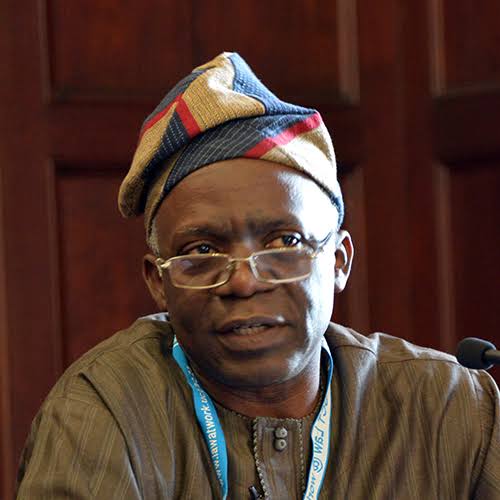
FALANA CALLS ON NBA TO INTENSIFY FIGHT AGAINST UNLAWFUL ARRESTS, DETENTION
Human rights lawyer and Senior Advocate of Nigeria, Femi Falana, has urged the Nigerian Bar Association to take stronger action against the unlawful arrest and prolonged detention of citizens by the police and other security agencies.
Falana made the call in a statement titled “Time for NBA to Stop Illegal Arrest and Detention of Nigerian Citizens,” following the emergence of the new leadership of the Nigerian Bar Association under its President, Oyinkansola Badejo-Okusanya.
He urged the NBA to ensure that members of the Human Rights Committees across all 145 branches of the association actively participate in the monthly inspection of police stations by magistrates.
According to Falana, existing laws already provide mechanisms for monitoring the treatment of suspects and preventing people from being held unlawfully for extended periods.
He specifically cited Section 34 of the Administration of Criminal Justice Act 2015 and Section 70 of the Nigeria Police Force Establishment Act 2020, which provide for monthly visits by chief magistrates to police stations within their jurisdictions.
During such visits, magistrates can examine arrest records, order the release of suspects where appropriate, grant bail or direct that suspects be formally arraigned before a court.
Falana argued that stronger involvement by lawyers during these inspections would help ensure that the legal safeguards provided for suspects are actually enforced.
He also called on the NBA to put pressure on the Chief Judge of the Federal High Court to designate judges to conduct regular inspections of detention facilities operated by security and law enforcement agencies other than police stations.
These include detention facilities belonging to agencies such as the Armed Forces, EFCC, ICPC, NDLEA and DSS.
The legal practitioner further reminded the NBA that the Nigerian Correctional Service Act 2019 gives the President and national officers of the association official visitor status to correctional centres across the country.
Falana therefore urged the NBA's leadership to begin making full use of this legal responsibility by visiting correctional facilities and monitoring the conditions under which inmates and detainees are held.
He also referred to a recent judgment of the National Industrial Court, which he said established a mandatory duty for police authorities to deploy police officers who are legal practitioners to every police division in Nigeria.
According to Falana, such officers should help ensure that human rights standards are observed during policing and that suspects are treated in accordance with the law.
He urged the new NBA leadership to ensure that the court's decision is implemented and that police officers with legal training are deployed to monitor compliance with human rights protections.
Falana's intervention comes amid longstanding concerns over arbitrary arrests, prolonged detention and alleged violations of the rights of suspects by law enforcement agencies.
He particularly expressed concern about the situation of indigent Nigerians, who may lack the financial resources or legal connections required to challenge unlawful detention.
He called on the NBA to use the legal provisions available to it to ensure that vulnerable citizens are not left without access to justice.
The senior lawyer's position places renewed pressure on the NBA to move beyond public statements on human rights and take practical steps to monitor detention facilities and intervene when citizens' rights are allegedly violated.
He maintained that existing laws provide sufficient mechanisms for lawyers, magistrates and judges to monitor the activities of law enforcement agencies, stressing that the challenge is ensuring that those provisions are effectively implemented.
Falana's call also comes as the NBA begins a new leadership cycle, with expectations that the association will play a stronger role in promoting the rule of law, access to justice and protection of fundamental human rights across Nigeria.