


BUSINESS
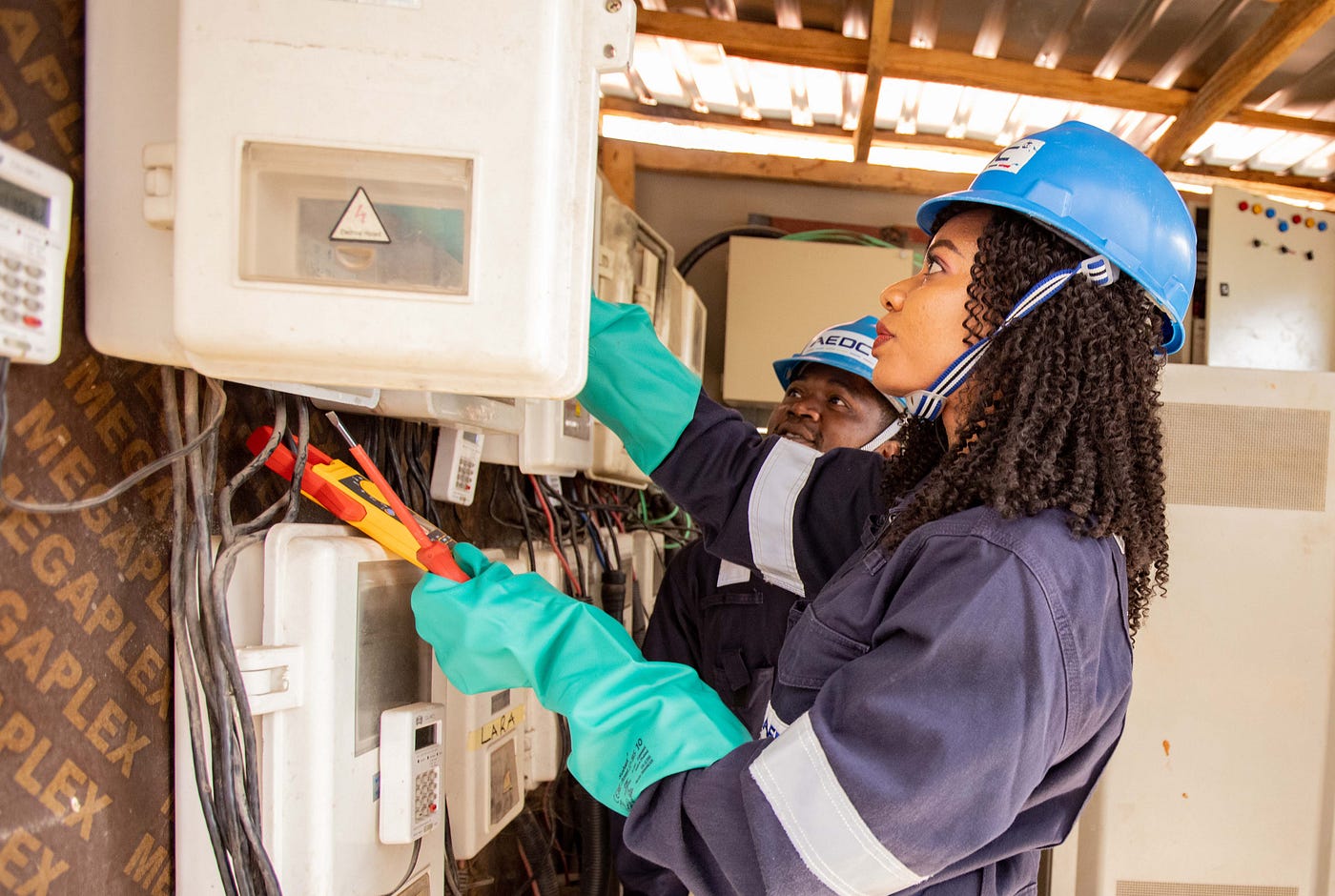
ELECTRICITY SHORTAGE DEEPENS, LEAVING MILLIONS IN DARKNESS
Electricity distribution companies (DISCOs) across Nigeria have adopted measures that are increasingly burdening consumers as the country faces a worsening power shortage.
Many Nigerians now receive only two to three hours of electricity daily, with DISCOs frequently attributing the situation to transmission constraints.
Power generation has reportedly declined to about 2,900 megawatts—an amount considered grossly inadequate for a population exceeding 200 million.
The impact has been severe, forcing some businesses to shut down while households struggle to cope with prolonged outages. Customers on Band B and Band C feeders appear to be the most affected.
A staff member of the Abuja Electricity Distribution Company (AEDC), who spoke on condition of anonymity, disclosed that the company has adopted a survival strategy that prioritizes feeders generating higher revenue.
According to the source, electricity supply is increasingly concentrated in Band A areas, where customers pay higher tariffs, leaving Band B and C customers with little or no power for most of the day.
“The approach is aimed at keeping the company afloat during this period of reduced supply,” the staff member explained.
“It is difficult to continue supplying electricity to areas that generate less revenue under these conditions. Customers who want more consistent power may have to pay higher rates.
“This situation is likely to persist as long as power generation remains at current levels. We are under pressure to meet operational targets, and prioritizing higher-paying customers has become necessary, even though we are still struggling to meet their demand.”
When asked about possible improvements, the staff member expressed pessimism, noting that the situation could worsen due to mounting debts within the sector and ongoing operational challenges.
Meanwhile, residents of Ushafa community in Abuja have voiced concerns over the deteriorating power supply, with some suggesting that the area be reclassified under Band A to improve electricity access.
In a message shared within the community, a resident recounted a discussion with an AEDC customer service officer, who indicated that areas on Band A are prioritized because they generate more revenue.
The officer reportedly explained that when electricity supply is limited, distribution companies channel available power to higher-paying areas to meet revenue targets and avoid penalties.
She cited Durumi Village as an example of a Band A area that receives preferential supply under such conditions.
According to the resident, lower-band areas often experience reduced supply, sometimes limited to four or five hours daily, with electricity occasionally restored late at night and cut off again in the early hours.
The resident also suggested that the issue may not be solely due to gas shortages, as commonly stated.
In response to inquiries, AEDC acknowledged the challenges, stating that the reduction in power supply is due to decreased allocation from the national grid.
The company explained that load shedding is being implemented to distribute the limited electricity available across all customers, which may result in shorter supply hours than expected.
In Kano, a small business owner, Zainab Badamasi Shakallo, expressed frustration over the unreliable electricity supply, saying she has lost confidence in the distribution company’s ability to provide consistent power.
“We had electricity briefly on Sunday afternoon for less than an hour. Before that, I cannot even remember the last time we had power,” she said.
She added that the lack of clear communication about the persistent outages has been particularly frustrating, especially during Ramadan and amid intense heat conditions.