


HEALTH
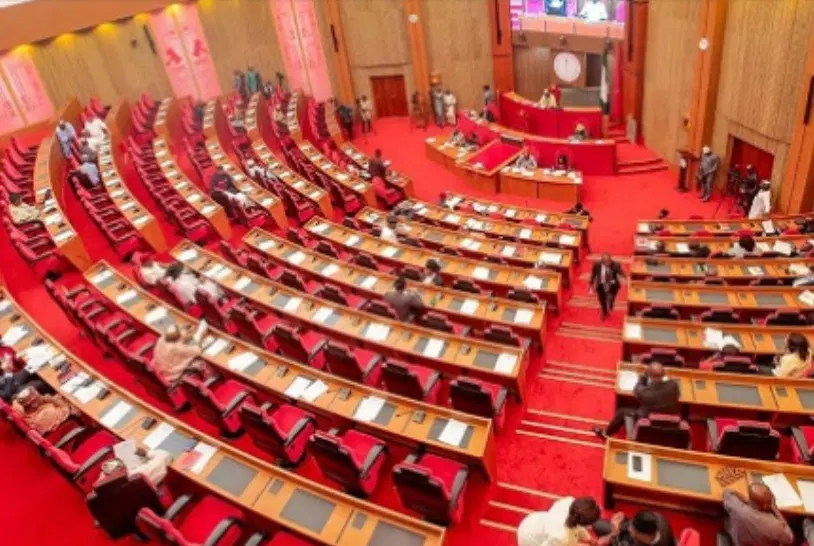
EBOLA: SENATE URGES FG TO MAKE SCREENING MANDATORY AT ALL ENTRY POINTS
The Nigerian Senate has urged the Federal Government to make health screening compulsory for all international passengers arriving in the country through airports, seaports and designated land borders, following the confirmation of an Ebola case in Nigeria.
The resolution was adopted on Wednesday after lawmakers considered a motion sponsored by Senator Francis Adedayo Faduyile, representing Ondo South, on the need to enforce mandatory screening to prevent the importation of Ebola and other epidemic-prone diseases.
The proposed screening measures include health declaration forms, temperature checks and symptom assessments for all arriving international passengers, regardless of their nationality or country of departure. Travellers who have visited or transited through affected areas within the preceding 21 days would undergo enhanced screening. The Senate also called for exit screening of departing passengers during declared public health emergencies.
The move follows the Federal Government’s confirmation of an Ebola case involving a woman who arrived in Nigeria on an international flight from Uganda. The patient was isolated and receiving medical care at a private hospital in the Federal Capital Territory, while health authorities identified 44 contacts for monitoring.
Faduyile warned that the spread of the Bundibugyo strain of Ebola from the Democratic Republic of the Congo to other African countries heightened the risk of infected travellers entering Nigeria through third countries. He also recalled Nigeria’s 2014 Ebola experience, when an infected traveller arrived through Lagos.
The Senate expressed concern that screening requirements had been limited to travellers from selected countries, potentially leaving gaps in the country’s disease surveillance system. Lawmakers also raised concerns about shortages of trained Port Health personnel and screening equipment at some entry points.
The chamber therefore urged the Federal Ministry of Health and Social Welfare, the Nigeria Centre for Disease Control and Prevention, and Port Health Services to implement the screening measures. It also called on the Federal Airports Authority of Nigeria and the Nigeria Immigration Service to ensure that entry points are equipped with trained health officers, thermal scanners, protective equipment, and isolation rooms.
The Federal Government was further urged to ensure that isolation and treatment centres are ready for use across all 36 states and the Federal Capital Territory.
On funding, the Senate called for emergency funds to be released from the Service-Wide Vote to support agencies involved in disease prevention and control, rather than allowing delays associated with fresh budgetary provisions. It also urged the National Assembly, working with the Ministry of Health, to repeal and reenact the Quarantine Act of 1926 as a modern public health law aligned with the International Health Regulations of 2005.
The lawmakers rejected a proposal for senators to visit the country’s major entry points, with Senate President Godswill Akpabio raising concerns about possible exposure to the virus. Relevant Senate committees were instead directed to engage with government agencies and report back within four weeks.
The resolutions are intended to strengthen Nigeria’s preparedness against Ebola and other infectious diseases through broader screening, better-equipped entry points and faster access to emergency funding.