


POLITICS
CONSTITUENCY PROJECTS: ALLEGED FUNDING SUSPENSION THROWS REPS INTO ROWDY SESSION
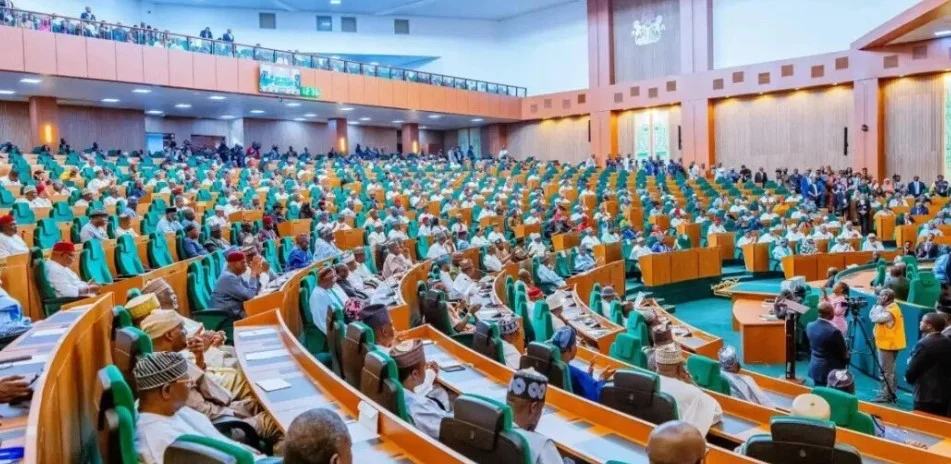
Proceedings in the House of Representatives turned rowdy on Wednesday as lawmakers clashed over the alleged suspension of funding for zonal intervention, popularly known as constituency projects, amid growing concerns over delays in the implementation of the 2026 budget.
The tension followed the consideration of a motion sponsored by the member representing Aba North/Aba South Federal Constituency of Abia State, Alex Ikwechegh, who decried what he described as poor funding of appropriated budgets and persistent delays in the release of capital funds to Ministries, Departments and Agencies.
The motion came on the heels of a constitutional point of order raised by the member representing Okpe/Sapele/Uvwie Federal Constituency of Delta State, Benedict Etanabene, who informed the House that he had seen a circular from the Office of the Accountant-General of the Federation announcing the suspension of funding for zonal intervention projects pending fresh verification requirements.
The debate quickly divided the chamber, with lawmakers across party lines expressing frustration over what they described as the slow implementation of projects approved by the National Assembly.
While the motion enjoyed overwhelming support, attempts by some members to oppose aspects of it were drowned out by loud shouts and protests from their colleagues, forcing the Speaker to repeatedly call for order.
Moving the substantive motion titled “Urgent need to address the poor funding of appropriated budgets and delayed releases to MDAs as revealed during the 2026 budget defence sessions,” Ikwechegh argued that the credibility of the appropriation process depends not only on the passage of the budget but also on the timely release and utilisation of funds.
He said, “The powers of appropriation in the National Assembly, and the credibility of the budget rest not only on the size of the figures appropriated, but on the fidelity, timeliness with which appropriation funds are released, cash-backed, and utilised for ministries, departments, and agencies.
“The House also notes that during the 2026 budget defence sessions, honourable ministers and heads of MDAs disclosed deeply troubling levels of funding of the 2025 budget, including sectors that recorded zero capital releases for the entire fiscal year, and others that received only a token, a fraction of their appropriated capital votes.
“The House is aware that these disclosures are consistent with repeated protests staged in 2025 and early 2026 by indigenous contractors of Nigeria that have invested heavily to do business with the Nigerian government at the Federal Ministry of Finance and at the gates of the National Assembly; on one occasion, disrupting plenary sittings because due to unpaid certificates for completed and verified projects with many contractors unable to service bank loans obtained to execute government projects.”
Ikwechegh recalled that President Bola Tinubu had, at a Federal Executive Council meeting on December 10, 2025, directed the immediate settlement of verified contractor liabilities estimated at about N1.5tn and approved the establishment of an inter-ministerial committee to reconcile records and facilitate payment.
According to him, “The House is further aware that a directive of the National Assembly approved the borrowing in excess of N1tn specifically to finance the settlement of outstanding obligations on completed and verified capital projects, in addition to dedicated provisions in the 2026 Appropriation Act for contractor liabilities, while the Minister of Finance have announced the clearance of substantial sums announcements, which contractors dispute as partial announcements.”
He expressed concern that despite the presidential directive and legislative approvals, the release of funds to MDAs had remained slow.
“The House is concerned that notwithstanding the clear directive of the President, the legislative approvals and the ministerial assurances releases to MDAs remain slow, if I may say inexistent, stalling critical projects, escalating contract costs, exposing contractors to insolvency, and rising non-performing loans and eroding public trust in the budget of the Federal Republic of Nigeria, approved by this parliament.”
The lawmaker also criticised a treasury circular dated June 29, 2026, reportedly issued by the Office of the Accountant-General of the Federation, which requires a Certificate of Verification and Compliance from the Federal Ministry of Special Duties and Intergovernmental Affairs before payments can be made for constituency projects.
He said, “The House is disturbed by recent newspaper reportage of a federal treasury circular dated 29th June, 2026 issued by the Office of the Accountant General of the Federation, halting payments for zonal intervention and constituency projects, unless a certificate of verification and compliance is first obtained from the Federal Ministry of Special Duties and Intergovernmental Affairs, a directive which however well-intentioned, introduces yet another layer of bureaucratic bottlenecks at the very moment Mr President has demanded speed and risks turning back the hands of the clock by subjecting duly appropriated, procured, and executed projects to further delay.”
He added, “Accordingly, the House resolves to commend first Mr President for his directive on the immediate settlement of the verified contractor liabilities, and urge his full, faithful, and speedy implementation by Fiscal authorities, and we also want to urge the President, as a father of the nation, to make out time, since we have invited Ministers, invited Security Chiefs, invited different members of the Economic Council to come here and explain to us why the budget is not being implemented.”
Earlier, Etanabene had urged the House to invoke its constitutional oversight powers by inviting Tinubu and members of his economic team to explain the rationale behind the reported suspension of constituency project funding.
Citing Sections 4, 88 and 89 of the 1999 Constitution (as amended), he argued that the legislature had a responsibility to demand accountability over the implementation of budgets it had approved.
He said, “I wish, Mr Speaker, that the Constitution be tested. I want to urge this House to agree that we summon the President of the Federal Republic of Nigeria together with his financial team to please come to this House in line with the provisions of the Constitution to brief Nigerians on exactly what is happening, because the stories are not complimentary at all.
“We cannot explain to the constituents what is happening. Today, we collect money. We will not be able to give a proper explanation for it. The budgets are not being implemented.
“Presently, in Nigeria today, we are implementing 2024, 2025 and 2026 budgets running concurrently. This is not in the best interest of everybody.
“So, Mr Speaker, I wish to move the motion that this House invite Mr President to come and explain and make us know the need for this circular that has been released.”
However, Speaker Tajudeen Abbas ruled that the aspect of the debate seeking to summon the President could not be adopted, describing such a move as inconsistent with parliamentary practice.
According to the Speaker, “the issue of summoning the President as included in the debate of Hon Ikwechegh cannot be adopted by the House,” noting that “such action is unparliamentary.”
The House subsequently adopted the substantive resolutions of the motion, urging the Federal Ministry of Finance, Budget Office of the Federation, Office of the Accountant-General of the Federation and the Central Bank of Nigeria to prioritise the timely release and cash-backing of appropriated funds, publish a clear schedule of releases for the 2026 fiscal year and conclude the verification and settlement of outstanding contractor liabilities within a publicly communicated timeframe.
Lawmakers also called on the fiscal authorities to apply the proceeds of the over N1tn borrowing earlier approved by the National Assembly strictly to the settlement of verified capital project obligations and render an account of the utilisation of the funds to parliament.
The House further urged the Office of the Accountant-General to review the June 29 Treasury Circular and harmonise it with the President’s directive by prescribing shorter timelines for issuing verification certificates to prevent further delays in project execution.
To strengthen legislative oversight, Abbas constituted a 12-man ad-hoc committee chaired by the member representing Bichi Federal Constituency of Kano State and Chairman, House Committee on Appropriation, Mr Abubakar Bichi.
The committee was mandated to interface with relevant fiscal authorities on the state of budget releases, settlement of contractor liabilities and utilisation of approved borrowings and report back to the House within four weeks.
Zonal Intervention Projects, commonly known as constituency projects, are federally funded projects nominated by members of the National Assembly for execution within their constituencies.
Although the projects are captured in the annual Appropriation Act and implemented through relevant MDAs, they have frequently been affected by delayed releases, verification disputes and funding shortfalls.
The latest controversy comes amid mounting concerns over the pace of budget implementation, with several lawmakers and contractors complaining that projects captured in previous budgets remain unpaid or incomplete despite repeated assurances by the Federal Government that verified obligations would be settled.