


HEALTH
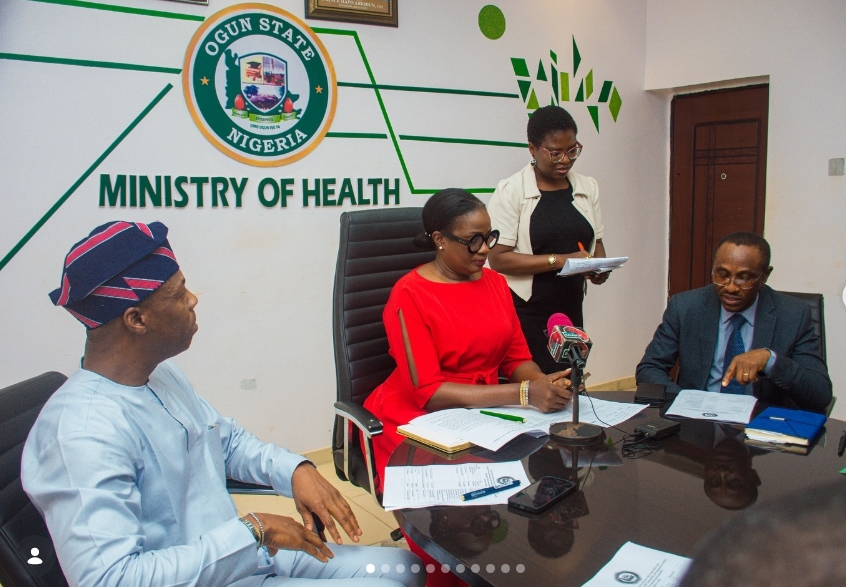
BLOOD TESTS BEGIN FOR 500 RESIDENTS AFTER OGUN LEAD EXPOSURE SCARE
The Ogun State Government has initiated a comprehensive and independent health audit of residents in Ogijo, Sagamu Local Government Area, following concerns over potential lead exposure in the community.
The Commissioner for Health, Dr. Tomi Coker, announced the audit during a stakeholders’ meeting at Ologijo Palace. The initiative follows the collection of blood samples from over 500 scientifically selected residents to determine their Blood Lead Levels (BLLs).
Dr. Coker stated, “After initial reports surfaced, both the Ministries of Health and Environment visited the community to address public concerns and outline a clear monitoring, evaluation, and response framework. The Ministry of Environment carried out environmental audits and assessments after closing companies identified as potential risks.”
She added, “The health sector adopted a rigorous scientific approach. Governor Dapo Abiodun directed that the Nigerian Institute of Medical Research (NIMR) independently conduct the study to ensure authenticity, transparency, and global credibility of the findings. NIMR is working independently to deliver unbiased results, and once the report is finalized, appropriate recommendations will be submitted to the governor for action.”
In November, the state government shut down seven factories involved in lead-acid battery recycling in the Ogijo area due to possible lead contamination. Lead ingot exportation was also temporarily suspended pending a full investigation. The closures followed an inspection led by the Commissioner for Environment, Dr. Ola Oresanya, after a viral video raised concerns about potential lead poisoning.
Speaking at Ologijo Palace, Dr. Coker said, “NIMR began fieldwork last week, collecting over 500 blood samples using a stratified scientific methodology. This includes individuals previously identified with elevated BLLs, pregnant and lactating women, children, and other residents within mapped areas of the community.”
While some previously closed facilities have since reopened following compliance reviews, Dr. Coker noted that the health ministry will implement a monitoring protocol requiring periodic BLL testing for workers in affected industries. She assured traditional leaders and residents that the governor remains committed to their welfare and will engage the community in developing sustainable solutions based on the audit outcomes.
Prof. Oladipo Obafunwa, Director-General/CEO of NIMR, explained that the institute deployed a professional team to conduct the exercise according to established scientific standards. Laboratory analyses will be conducted with integrity, and findings will be presented objectively.
Oba Kazeem Gbadamosi, traditional ruler of the area, expressed gratitude to the government for its prompt and transparent engagement. He assured full cooperation from the community and expressed confidence that the audit would provide clarity and reassurance to residents.