


POLITICS
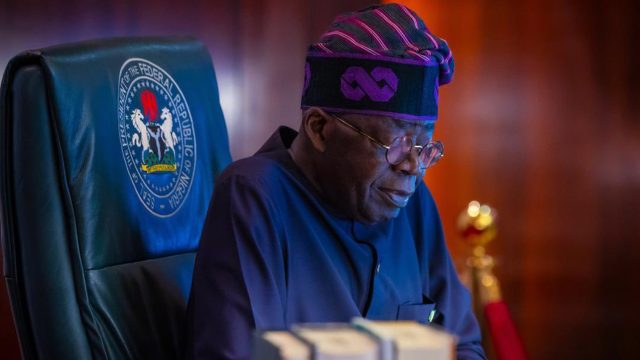
APC, FINANCE MINISTER EXPRESS CONFIDENCE IN NIGERIA’S $1TN ECONOMY GOAL
The All Progressives Congress and the Federal Government have expressed confidence that Nigeria can achieve President Bola Tinubu’s ambitious target of growing the country’s economy to $1 trillion by 2030, pointing to recent improvements in economic indicators as evidence that ongoing reforms are beginning to produce results.
The optimism was expressed following the release of Nigeria’s second-quarter 2026 economic figures, which showed that real Gross Domestic Product grew by 4.43 per cent year-on-year. The development has been cited by government officials and APC leaders as an indication that the economy is moving towards greater stability and broader-based growth.
Speaking at the second Asiwaju Scorecard Series and Asiwaju Policy Roundtable in Abuja, APC National Chairman, Professor Nentawe Yilwatda, who represented President Tinubu, said the administration remained focused on moving the country through what he described as a progression from economic uncertainty to stability, growth and ultimately prosperity.
Yilwatda highlighted several indicators which, according to him, demonstrate improvements in the Nigerian economy. He disclosed that the country’s gross external reserves had risen to approximately $52.7 billion by August 2026, while consolidated non-oil revenue increased from about N13.63 trillion in 2023 to N16.4 trillion during the first two quarters of 2026.
The APC chairman also pointed to Nigeria’s improved trade position, noting that the country’s merchandise trade surplus rose from about N44.8 billion recorded for the whole of 2023 to approximately N7.54 trillion in the first quarter of 2026 alone. He added that inflation had declined from its earlier peak to around 15.4 per cent, while real GDP growth reached 4.43 per cent in the second quarter.
Despite the positive figures, Yilwatda acknowledged that the improvements did not mean that Nigeria’s economic difficulties had disappeared. He stressed that macroeconomic stability should be regarded as the foundation upon which wider prosperity would be built, rather than as an indication that all economic challenges had already been resolved.
He explained that the administration’s $1 trillion target should not be viewed merely as a numerical objective. According to him, the ambition is intended to transform Nigeria into a more productive and export-oriented economy capable of attracting investment, creating jobs and providing greater opportunities, particularly for young Nigerians.
Finance and Coordinating Minister of the Economy, Taiwo Oyedele, also expressed optimism about the target following the release of the second-quarter GDP figures. In a statement, the minister argued that the latest performance showed that economic growth was becoming increasingly broad-based.
Oyedele noted that 27 economic subsectors recorded real growth above three per cent during the second quarter of 2026, compared with 23 subsectors in the corresponding period of 2025. He said the improvement was visible across major areas of economic activity, including manufacturing, agriculture and services.
According to the minister, manufacturing expanded by 3.24 per cent in the second quarter, compared with 1.60 per cent during the same period of 2025. Agriculture grew by 4.39 per cent, up from 2.82 per cent, while the services sector, Nigeria’s largest contributor to economic activity, recorded 4.60 per cent growth against 3.94 per cent in the previous year’s corresponding quarter.
Oyedele also attributed part of the increase in Nigeria’s economy when measured in dollar terms to the appreciation of the naira. He said the currency appreciated by more than 12 per cent between the first half of 2025 and the first half of 2026, contributing to an estimated 17 per cent expansion in the size of the economy in US dollar terms over the period.
The minister said that sustaining the current economic trend alongside government social programmes could improve dollar incomes, strengthen purchasing power and contribute to reducing poverty among millions of Nigerians.
Oyedele further cited an International Monetary Fund projection which he said placed Nigeria among the 10 countries expected to contribute the most to global real GDP growth in 2026. He stated that the IMF projected Nigeria would account for roughly 1.5 per cent of global economic growth during the year.
The economic discussion also featured a strong defence of the Tinubu administration’s decision to remove the petrol subsidy. Former Bauchi State governor and Chairman of the APC Professionals Forum Board of Trustees, Isa Yuguda, argued that the policy should be assessed not only from the perspective of the immediate hardship experienced by Nigerians but also against the weaknesses and alleged leakages associated with the former subsidy system.
Yuguda referred to his experience as chairman of the Fuel Subsidy Task Force in 2009, saying the committee uncovered irregularities, fraudulent practices and financial leakages within the subsidy regime. He argued that the system had consumed substantial public resources that could otherwise have been directed towards sectors such as education, healthcare, security, agriculture and infrastructure.
The former governor described Tinubu’s decision to remove the subsidy as a politically difficult reform which previous administrations had recognised as necessary but had been unable to implement fully. He maintained that the policy had subsequently created greater fiscal room for federal, state and local governments to finance critical national priorities.
Yuguda cited education as one area where he believed additional fiscal capacity was being deployed, pointing to the Nigerian Education Loan Fund and its role in expanding access to higher education. He also referenced increased government spending on the security sector, including operational support and modern equipment for security agencies.
The optimism surrounding the $1 trillion target comes as political parties and stakeholders begin preparations for the 2027 general elections, making the performance of the Tinubu administration’s economic reforms an increasingly important part of the political debate.
For the APC and its representatives, the recent GDP figures, improved foreign reserves, stronger non-oil revenue and changes in the trade balance provide grounds for confidence. However, the administration still faces the challenge of ensuring that macroeconomic improvements translate into better living conditions, stronger purchasing power, employment opportunities and sustainable growth.
The success of the $1 trillion ambition will ultimately depend not only on the headline GDP figures but also on the government's ability to sustain productive-sector growth, attract investment, expand exports, strengthen domestic industries and ensure that economic gains are widely shared.
With just over three years remaining until the 2030 target, the government is presenting the latest economic indicators as evidence that Nigeria is moving in the right direction. The coming years will determine whether that progress can be sustained sufficiently to turn the $1 trillion ambition into reality.