


BREAKING NEWS
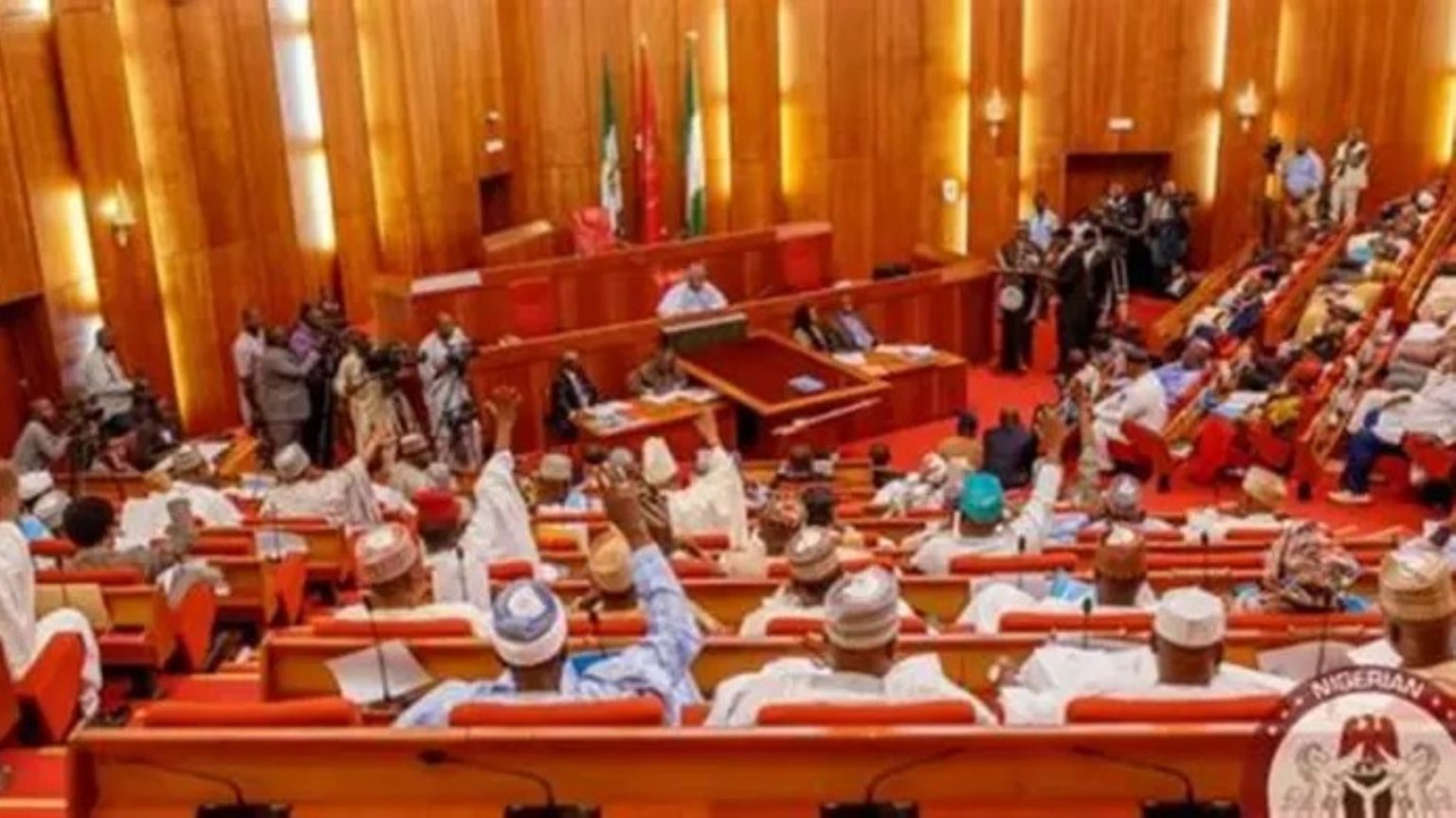
AGAIN, SENATE REJECTS PFIPC PROBE AS ATIKU SLAMS FG OVER N6.44B W’CUP BUDGET
• Akpabio: PFIPC probe under executive, judicial review
• Senate’s integrity on trial, Sumaila fumes
The Senate, yesterday, again blocked Senator Kawu Sumaila’s fresh attempt to investigate the controversial Presidential Foreign Intervention Promotion Council (PFIPC) after the upper chamber ruled that the matter was already before the courts and under executive review.
The alleged ghost agency is said to have secured over N1.3 billion in the 2026 Appropriation Act. This latest move came after Sumaila, representing Kano South, rose under the relevant Senate Standing Order on the appropriation process to demand an investigation into the establishment, budgetary allocation, operations, legal status and controversy surrounding the alleged agency.
Amid the public uproar over the PFIPC scandal, the presidential candidate of the African Democratic Congress (ADC), Atiku Abubakar, yesterday accused the President Bola Tinubu administration of plotting to manipulate the narrative surrounding the controversial agency by shielding government officials from scrutiny and redirecting blame towards the opposition.
In a statement by his Senior Special Assistant on Public Communication, Phrank Shaibu, Atiku described the recent arrest of the self-styled Director-General of the PFIPC, Adeniyi Adeyemi, as a calculated move to extract statements that could be deployed to implicate opposition figures rather than uncover the full truth behind the scandal.
He stated that the PFIPC controversy cannot be reduced to Adeyemi’s alleged actions alone.
Sumaila said the purpose of the motion was to protect the integrity of the Senate, the appropriation process and the federal government, adding: “The issues raised directly affect the integrity of the Senate, the credibility of the National Assembly and the effective exercise of our constitutional oversight and appropriation responsibilities.”
According to the former vice president, the weightier scandal is how an organisation that the presidency now claims was fictitious or non-existent allegedly penetrated the highest levels of government, obtained diplomatic recognition and accreditation, recruited over 300 personnel, secured office accommodation at the National Secretariat and reportedly received budgetary allocations, including an alleged N1.3 billion provision in the 2026 Appropriation Act.
He maintained that such extensive operations could not have occurred without either an active official collaboration or a catastrophic breakdown of oversight across multiple government institutions.
“The scandal is not merely that one man allegedly impersonated public authority,” Atiku argued.
“The greater scandal is that the Tinubu administration allegedly opened the doors of the Nigerian state to him, allowed him to acquire the appearance and privileges of official legitimacy and permitted him to interact with institutions and diplomatic interests in the name of the federal government.”
Specifically drawing attention to the allocation of N6.44 billion for a “Special Presidential Support Group for the 2026 World Cup Qualifiers,” Atiku added that the PFIPC controversy must also be viewed against the wider background of what he described as mind-boggling profligacy and questionable appropriations embedded in the 2026 federal budget.
He noted that the allocation was in spite of Nigeria having already been eliminated during the qualification process in November 2025 – about one month before the 2026 budget was presented to, and considered by the National Assembly.
Consequently, he queried: “How does a serious government budget N6.44 billion for presidential support for World Cup qualifiers after the country had already been eliminated? What competition was the money intended to support?
“Who inserted the provision, who approved it and who was expected to benefit from an expenditure whose stated purpose had already ceased to exist?”
He described the allocation as not merely an example of poor judgment but a damning indictment of the integrity of the budgeting process, saying it reinforced public suspicion that the national budget had become a warehouse for dubious expenditures, fiscal waste and allocations without any defensible public purpose.
Atiku said the PFIPC scandal had become a major embarrassment to Nigeria’s international reputation, warning that it must not be swept under the carpet like several other unresolved controversies, including the Humanitarian Affairs Ministry scandal, questions surrounding refinery rehabilitation expenditures and various disputed budgetary allocations.
According to him, “the Tinubu administration has a peculiar proclivity for propaganda, and we are reliably informed that there are plans to twist the facts of the PFIPC scandal, absolve those within the government who ought to answer questions and manufacture a politically convenient story against the opposition.”
Doubting the credibility of the probe ordered by President Tinubu as “insufficient, self-serving and incapable of inspiring public confidence in the government’s claim of innocence,” Atiku called on the National Assembly to “immediately constitute an independent bipartisan panel to investigate every aspect of the PFIPC scandal.
“We also urge the Nigerian Bar Association, civil society organisations, the diplomatic community and every Nigerian of good conscience to reject any choreographed cover-up masquerading as an investigation.”
During plenary yesterday, Sumaila argued that though senior presidency officials had publicly described the PFIPC as fake, fictitious and unauthorised, the same body still appeared in the 2026 Appropriation Act under Budget Code 0111062001, with an allocation of N1,302,978,784, broken down into N802.98 million for personnel, N200 million for overhead and N300 million for capital expenditure.
According to him, the key question was how an agency whose existence had been denied by the presidency still passed through the executive budget process, legislative scrutiny and presidential assent to receive a budget code and appropriation.
He maintained that while anti-corruption agencies could investigate possible criminal conduct, only the National Assembly could examine whether its own appropriation and oversight processes had failed.
However, before the motion could proceed, Senate President Godswill Akpabio said developments had overtaken the matter, stating that those connected with the controversy had already been charged in court, thereby making parts of the issue subjudice.
He also disclosed that President Tinubu had set up a committee to investigate the entire controversy, including the establishment of the alleged agency, its budgetary allocation, opening of bank accounts, offices and other related activities.
“Given these ongoing processes, if the Senate proceeds with its own investigation now, we may be jumping the gun and potentially prejudicing the judicial process, especially as prosecution is already underway,” Akpabio ruled.
Consequently, he advised that consideration of the motion be suspended pending the outcome of the executive investigation and the court proceedings.