


PEOPLE & POLITICS
870 NIGERIANS KILLED IN ELECTION VIOLENCE DESPITE PEACE ACCORDS, REPORT SHOWS
At least 870 people have been killed in election-related violence in Nigeria over the past 11 years, despite repeated peace agreements signed by political parties and presidential candidates ahead of major elections.
The figures have renewed concerns about the effectiveness of the peace accords facilitated by the National Peace Committee, particularly as political parties and candidates prepare for the 2027 general elections.
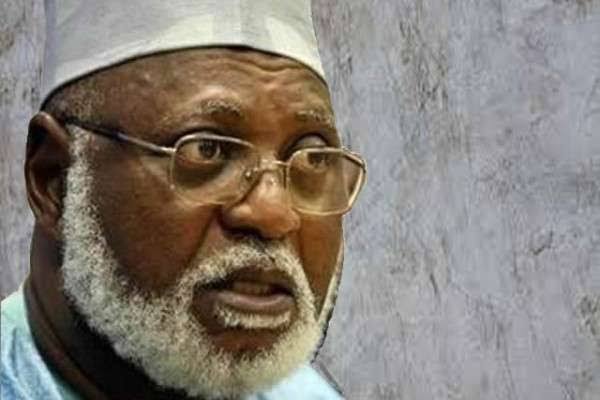
The National Peace Committee, chaired by former Head of State General Abdulsalami Abubakar and co-chaired by the Catholic Bishop of Sokoto Diocese, Matthew Kukah, introduced the peace accord ahead of the 2015 general election.
The initiative was designed to encourage political parties and candidates to reject violence, respect the electoral process and accept election results in the interest of national peace and democratic stability.
Ahead of the 2015 presidential election, the then presidential candidates of the All Progressives Congress and Peoples Democratic Party, Muhammadu Buhari and Goodluck Jonathan, signed the agreement and pledged to avoid actions capable of undermining the electoral process.
However, election-related violence continued despite the agreement.
According to a 2016 report by the Council on Foreign Relations, 106 people were killed during the 2015 elections. The situation became considerably worse during the 2019 election cycle.
The Nigeria Civil Society Situation Room estimated that 626 people were killed in the six months between the beginning of electioneering activities and the commencement of the 2019 elections.
The 2023 general elections also recorded significant casualties. The Centre for Democracy and Development reported approximately 109 deaths linked to electoral violence during that election period, despite candidates signing peace agreements.
The trend continued during the recently concluded Osun State governorship election, where at least 29 deaths were reported.
The repeated loss of lives has consequently raised questions about whether peace accords have gone beyond ceremonial gatherings and signatures to become effective mechanisms for preventing electoral violence and punishing those who violate their commitments.
With the 2027 elections approaching, the National Peace Committee recently brought together political parties and several presidential contenders to sign another peace agreement.
President Bola Tinubu was represented at the event in Abuja by the Secretary to the Government of the Federation, George Akume. Other presidential contenders present included Peter Obi, Adewole Adebayo, Omoyele Sowore and Donald Duke.
However, former Vice-President Atiku Abubakar, the presidential candidate of the African Democratic Congress, was absent from the ceremony.
The ADC explained that its decision was based on its belief that the peace process should go beyond obtaining signatures from politicians.
The party's National Publicity Secretary, Bolaji Abdullahi, said the committee should be empowered to publicly identify individuals who breach the agreement and ensure that violations attract consequences.
Civil society organisations have expressed similar concerns, arguing that politicians and their supporters must face consequences when they engage in inflammatory rhetoric or activities capable of triggering violence.
The Country Director of Amnesty International, Isa Sanusi, said the objective of the peace accord was commendable but argued that previous agreements had not done enough to prevent electoral violence.
He called for sanctions and a system capable of monitoring and documenting breaches of the agreement.
The Social Democratic Party also called for stronger enforcement of electoral laws, arguing that simply signing an agreement without consequences for violations would have limited impact.
However, security expert Kabir Adamu offered a different perspective, arguing that the effectiveness of the peace accord should not be judged solely by whether violence occurs after it is signed.
Adamu said the latest agreement contains mechanisms that could potentially make it more effective than previous versions, including legal provisions linked to the Constitution and Electoral Act.
He also highlighted the involvement of the Nigeria Police Force and Independent National Electoral Commission, as well as the Election Security Information Hub established by the Kukah Centre to monitor security incidents and electoral offences.
According to him, the new approach could allow violations to be documented, monitored and linked to appropriate responses rather than leaving the peace agreement as a symbolic political ceremony.
The debate comes as Nigeria prepares for another highly competitive election cycle in 2027, with political parties already intensifying campaigns, alliances and mobilisation efforts.
The history of electoral violence in the country has included killings, intimidation, destruction of property, hate speech and attacks on political opponents and supporters.
The latest peace accord will therefore face its biggest test as political activity increases and campaigns become more intense.
For the National Peace Committee and other stakeholders, the key challenge will be ensuring that political actors who breach the agreement are identified and held accountable.
With 870 deaths recorded over 11 years, pressure is mounting on political parties, security agencies, electoral authorities and the National Peace Committee to ensure that the 2027 elections do not repeat the violence associated with previous electoral cycles.
The effectiveness of the latest agreement will ultimately depend not only on the signatures of political actors but also on the willingness of relevant institutions to monitor violations and impose meaningful consequences.